How Siemens India is redefining workforce transformation by embedding HR at the strategic core ?
How Siemens India is redefining workforce transformation by embedding HR at the strategic core, leveraging AI as a capability enhancer, and investing in leadership and skills development to navigate the complexities of digital disruption.
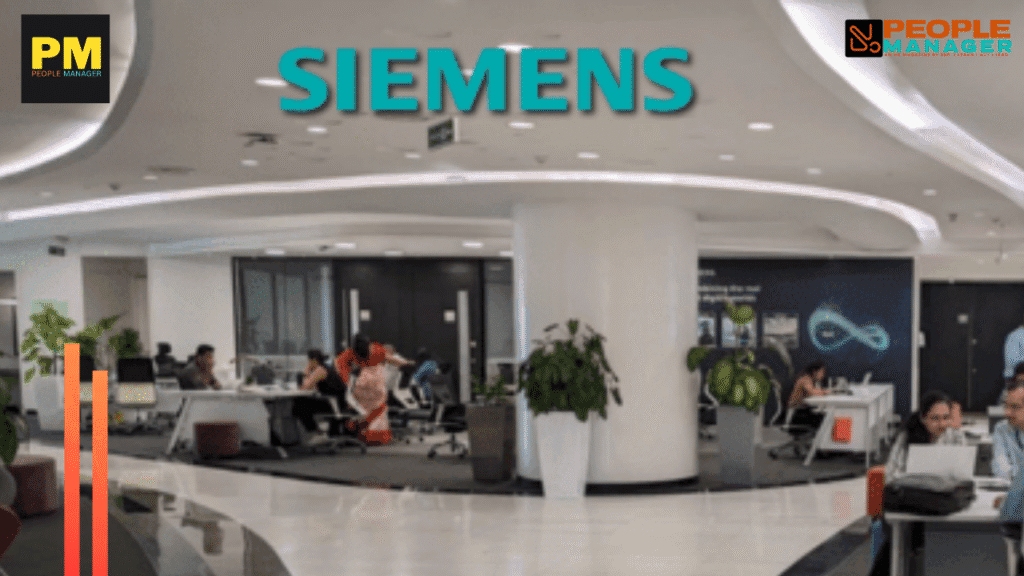
For decades, human resources (HR) departments have been relegated to the administrative periphery of corporate decision-making. Their remit traditionally included payroll, recruitment, and compliance—functions essential but rarely strategic. At Siemens India, however, this paradigm is being actively dismantled. The company’s approach to workforce transformation—anchored in early HR integration, AI deployment, leadership development, and skills acceleration—offers a compelling case study in how legacy manufacturers can evolve in the digital age.
From Administrative Support to Strategic Partner
At the heart of Siemens India’s transformation is a reimagining of HR’s role. “No business review, no strategy discussion, no workforce planning happens without HR involvement,” asserts Shilpa Kabra Maheshwari, Executive Vice President and Country Head of People and Organisation at Siemens India. This statement signals a fundamental shift: HR is no longer a downstream executor of business decisions but a co-architect of strategy.
This integration is not merely symbolic. Siemens’ HR leaders participate in business reviews, contribute to growth planning, and co-develop workforce strategies aligned with technological and market shifts. In sectors like power generation and industrial automation—where Siemens operates—this alignment is critical. These industries demand not only engineering excellence but also digital fluency, and HR is now tasked with bridging that gap.
Navigating the Strategic Integration Challenge
Traditional manufacturing models were built on predictability—long product cycles, stable roles, and linear career paths. Digital transformation has disrupted this stability. AI, automation, and shifting customer expectations require agile, cross-functional teams and continuous upskilling.
Maheshwari acknowledges this shift: “The role of HR has not changed just today; it’s been changing over the years. What stands out now is the ability to partner with business for growth and scale.” This evolution is evident in Siemens’ pivot from transactional HR to strategic enabler, focusing on leadership pipelines, organisational agility, and future-ready capabilities.
Yet, the challenge remains: is this integration deep and durable, or is it a well-crafted narrative? Many firms claim strategic HR alignment, but few embed it into operational decision-making. Siemens’ test lies in whether HR’s influence extends beyond forums and into measurable business outcomes.
AI as a Capability Multiplier
Perhaps the most tangible aspect of Siemens’ transformation is its approach to artificial intelligence. Rather than viewing AI as a threat to jobs or a blunt cost-cutting tool, Siemens frames it as a “career accelerator.” This philosophy is operationalised through platforms like My Learning Board, which uses AI to personalise learning journeys based on individual styles and aspirations.
AI also powers recruitment and internal mobility systems, optimising candidate-job matches and surfacing skill development opportunities. Chatbots streamline HR service delivery, while hackathons invite employees to co-create AI solutions for internal and customer-facing challenges.
This multi-pronged deployment suggests more than a superficial embrace of AI. However, the absence of concrete metrics—such as improved retention, productivity gains, or innovation outcomes—makes it difficult to assess impact. Still, the emphasis on employee involvement and digital literacy indicates a human-centric approach to technology adoption.
Building Agility Through Collaboration
Siemens defines agility not as a buzzword but as a structural imperative. “Agility for us means cutting the barriers in the way teams function,” says Maheshwari. The company promotes cross-functional collaboration, rapid decision-making, and a unified customer-facing approach under the banner of “One Siemens.”
To support this, Siemens hosts regular leadership forums and internal conferences that reinforce agile principles. These initiatives aim to dismantle silos and foster a culture of responsiveness. Yet, as with many large organisations, the challenge lies in translating these principles into everyday behaviours. True agility requires not just structural changes but also mindset shifts across all levels of the organisation.
Leadership Development for a Hybrid, Complex World
Recognising that leadership is the linchpin of transformation, Siemens has invested in structured development programmes. The People Leader Programme, a six-month initiative, blends neuroscience-based assessments, virtual team management, and 360-degree feedback to prepare leaders for hybrid work and generational diversity.
Complementing this is Elevate, a programme targeting mid-level managers—often the critical layer where strategic intent meets operational execution. These managers are trained to navigate ambiguity, manage change, and lead digitally enabled teams.
While the content appears robust, the real value lies in Siemens’ openness to external expertise. By integrating global insights and best practices, the company acknowledges that internal knowledge alone cannot address the complexities of modern leadership.
Scaling Skills Development
Siemens’ commitment to upskilling is evident in its suite of development programmes. The Game Changer Programme nurtures next-generation leaders, Core Learning Paths focus on technical and leadership skills, and Potential Development Programmes target emerging technologies.
The company claims these initiatives have “accelerated skill acquisition” and improved “project delivery efficiency, innovation rates and overall business performance.” While specific metrics are lacking, rising voluntary participation suggests that employees perceive real value. This is a critical indicator—mandatory training often yields compliance, but voluntary engagement signals relevance and impact.
Still, the question remains: do these programmes build capabilities faster or better than traditional on-the-job learning? Siemens’ structured approach may formalise and scale what was once informal, but its effectiveness will depend on continuous iteration and alignment with business needs.
Balancing Technology and Humanity
Underlying Siemens’ transformation is a guiding philosophy: “Technology enhances human potential.” This belief is reflected in AI learning labs, curated generative AI programmes with human oversight, and co-creation initiatives that keep employees at the centre of innovation.
Such investments suggest a genuine commitment to human-centric transformation. However, the real test will come during economic downturns. Will Siemens maintain its investment in people when margins tighten, or will it revert to cost-cutting? Maheshwari insists that “foundations for us have always been humanly centred, enabled by technology.” Sustained commitment across business cycles will determine whether this is a cultural cornerstone or a strategic convenience.
Conclusion: Strategic HR or Strategic Messaging?
Siemens India’s workforce transformation journey offers valuable lessons for legacy manufacturers navigating digital disruption. By embedding HR into strategic planning, leveraging AI as a capability enhancer, investing in leadership and skills development, and maintaining a human-centric ethos, the company presents a model worth watching.
Yet, the ultimate measure of success lies not in programme design or messaging but in outcomes. Do these initiatives drive innovation, improve agility, and enhance competitiveness? Do employees feel empowered, engaged, and future-ready?
For now, Siemens India appears to be walking the talk. Whether it can sustain and scale this transformation will define its legacy—not just as a manufacturer, but as a model for workforce evolution in the age of AI.
For further insights into the evolving workplace paradigm, visit

- Shilpa Kalathur on Plugging the ‘Leaky Pipeline’ via Flexible Tech Ecosystems - October 10, 2026
- Ashish Gupta on Employee Benefits : Are they Ready for the “Sandwich Generation”? - October 10, 2026
- Zypp Electric Expands Employee Ownership with ₹11 Crore ESOP Allocation - October 2, 2026