
The Trust Imperative: Why Modern CHROs Must Integrate Growth, Governance and Culture
Trust is built through consistent leadership behavior. Employees observe how decisions are approached, how challenges are addressed, and how accountability is demonstrated. When integrity is consistently valued alongside performance, trust continues to deepen.

In today’s business environment, trust is no longer a cultural aspiration. It is operational infrastructure. In an era defined by regulatory intensity, digital acceleration, and heightened stakeholder scrutiny, trust has moved to the center of strategic dialogue. It is no longer a soft metric. It is a core business priority that increasingly sits within the CHRO’s mandate.
For much of the past two decades, the CHRO’s role was associated with talent acquisition, performance management, and engagement. Today, that definition has expanded. The modern CHRO operates at the intersection of growth ambition, governance discipline, and cultural integrity. In highly regulated sectors such as financial services, this integration is essential to long term success.
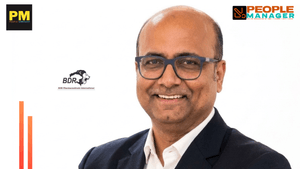
Having spent over two decades in financial services, and in my role at IIFL Finance, I have seen that business expansion is most effective when it aligns closely with regulatory expectations and stakeholder confidence. At IIFL Finance, where teams operate across diverse markets and customer segments, consistency in approach becomes as important as speed of growth. Strong governance supported by cultural alignment enables organizations to scale with clarity. The CHRO’s mandate is to ensure that both are reinforced by a culture anchored in trust.
From Talent Custodian to Strategic Steward
The CHRO role today is deeply connected to enterprise strategy. Human capital decisions such as leadership appointments, succession pipelines, and capability investments shape both growth trajectory and organizational resilience. Boardroom conversations now include workforce readiness, leadership accountability, and cultural alignment alongside performance outcomes.
In this context, the CHRO serves as a steward of institutional balance. Growth strategies are strengthened by leadership depth and ethical clarity. In fast growing financial organizations, where business momentum is high, this balance ensures that performance is supported by consistency and sound judgment. Market expansion benefits from talent that combines performance orientation with thoughtful decision making. Compensation models that recognize both outcomes and responsible behavior further reinforce this alignment.
Trust as the Foundation of Sustainable Growth
Sustainable growth in high performance, regulated environments is supported by employee trust. When employees trust leadership, they engage more openly, contribute ideas, and align their actions with long term organizational priorities. Trust encourages early dialogue, thoughtful decision making, and shared ownership.
In fast paced environments where expectations are high and timelines are dynamic, employees often navigate complex decisions. It is in these moments, beyond formal frameworks, that trust plays a defining role. In our context, where frontline teams engage closely with customers across varied markets, trust enables consistent decision making even in dynamic situations.
Across large and distributed teams, trust also creates a shared sense of direction. It allows individuals across roles and locations to operate with clarity and confidence.
In financial services, where credibility is central, trust strengthens consistency in behavior and decision making. Employees who experience transparency and fairness are more likely to internalize governance principles, contributing to a stable and confident organization.
Trust is built through consistent leadership behavior. Employees observe how decisions are approached, how challenges are addressed, and how accountability is demonstrated. When integrity is consistently valued alongside performance, trust continues to deepen.
Integrating Governance and Culture
Governance and culture are most effective when they operate in alignment. Clear policies and accountability structures provide clarity and direction, while culture shapes how these are experienced and practiced.
Strong governance supported by culture encourages ownership. A well aligned culture strengthens the impact of governance.
The opportunity lies in thoughtful integration. When governance is translated into everyday behaviors, it becomes part of how work is done. Embedding these principles into leadership development, performance evaluation, and daily interactions creates consistency across the organization. In practice, this also means ensuring that teams across business lines interpret governance expectations consistently while delivering on business priorities.
Recognizing leaders for both outcomes and approach reinforces expectations. Scenario based learning that includes real world decision making strengthens capability. In organizations with diverse business lines, this shared understanding becomes critical in maintaining alignment across teams. Open communication around regulatory expectations builds awareness and shared responsibility.
When governance is integrated into culture, it becomes a source of confidence and professionalism.
Transparency, Ethical Leadership, and Communication
Transparent communication plays a key role in building trust. Employees value clarity not only on decisions, but also on the context and intent behind them. This fosters alignment and strengthens engagement.
Ethical leadership further reinforces this environment. Leaders influence culture through everyday actions. Demonstrating accountability and communicating with openness and empathy strengthens credibility across the organization.
The CHRO supports this by enabling structured communication, building leadership capability, and ensuring consistency in messaging. In large organizations, consistency in communication plays an important role in reinforcing trust across levels and geographies. Trust grows in environments where information flows clearly.
Human Capital as a Strategic Lever
Boards and leadership teams are increasingly viewing human capital strategy as central to long term value creation. Leadership capability, cultural alignment, and employee engagement contribute significantly to organizational stability and performance.
This perspective encourages a broader view of metrics. Culture insights, leadership indicators, and employee feedback provide meaningful signals of organizational health.
Culture, in this context, becomes a valuable indicator that supports proactive and informed decision making.
The CHRO’s role is to connect these insights with broader business priorities, ensuring alignment between people strategy, governance, and growth.
Preparing for a Complex Future
As organizations advance in digital transformation and artificial intelligence adoption, the importance of trust continues to grow. Technology enables scale and efficiency while introducing new dimensions of responsibility.
Employees benefit from both technical capability and sound judgment in applying it. Integrating digital skills with governance awareness ensures that innovation is supported by thoughtful decision making.
Continuous learning frameworks that combine these elements prepare organizations for the future. In this evolving landscape, trust provides both direction and stability.
Conclusion
The CHRO’s mandate today extends beyond managing talent. It includes enabling sustainable growth while strengthening institutional credibility. By aligning governance with culture, organizations create a strong foundation for long term success.
Trust is built through systems, reinforced through leadership, and sustained through culture. For the modern CHRO, this is central to enabling growth that is both scalable and sustainable. For further insights into the evolving workplace paradigm, visit