

Shared Auto‑Rickshaw Is Not a ‘Workplace’ Under PoSH Act : Bombay HC
The Bombay High Court’s judgment in Siddhesh Pradeep Satpute vs State Bank of India & Ors. is a reminder that workplace safety laws must be applied within their defined scope. Shared auto‑rickshaws arranged privately by employees do not constitute a workplace under the PoSH Act.
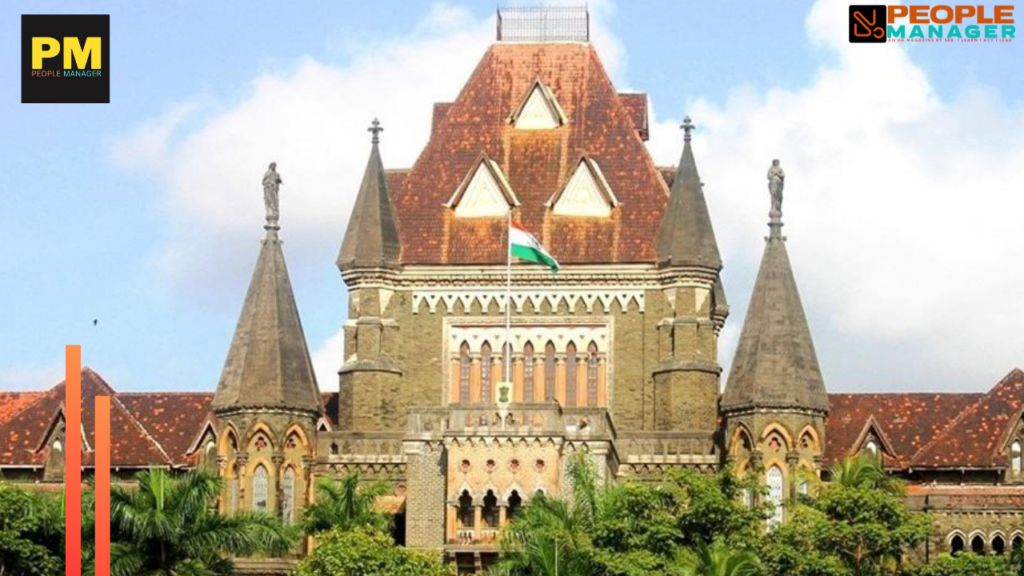
Mumbai, June 26 – In a ruling that sharpens the boundaries of workplace jurisdiction under India’s sexual harassment law, the Bombay High Court has held that a shared auto‑rickshaw used by employees for commuting does not qualify as a “workplace” under the Sexual Harassment of Women at Workplace (Prevention, Prohibition and Redressal) Act, 2013 (PoSH Act).
The decision, delivered in Siddhesh Pradeep Satpute vs State Bank of India & Ors. (Writ Petition No. 1213 of 2024), underscores that incidents alleged to have occurred in such settings cannot be investigated by an Internal Committee (IC) constituted under the PoSH Act.
The Case
The matter arose from a complaint filed by a female employee of the State Bank of India against a male colleague. She alleged sexual harassment during a shared auto‑rickshaw ride while travelling to work.
The employer’s Internal Committee investigated the complaint and found the male employee guilty. The findings were challenged before the High Court, which was asked to determine whether the IC had jurisdiction to inquire into incidents occurring during commuting in privately arranged transport.
Court’s Observations
After examining the provisions of the PoSH Act, the Court focused on Section 2(o), which defines “workplace.” The definition is broad, covering offices, branch units, extended work sites, and even employer‑provided transport.
However, the Court noted that the shared auto‑rickshaw in question was arranged independently by employees for commuting purposes. It was not employer‑provided, controlled, or supervised. As such, it did not fall within the statutory definition of workplace.
The Court held that the IC lacked jurisdiction to inquire into the complaint. Consequently, the committee’s findings were set aside.
Reinforcing Jurisdictional Limits
The judgment reinforces a critical principle: Internal Committees under the PoSH Act can only exercise powers within the statutory framework. While the Act adopts an expansive interpretation of workplace in many circumstances, not every location where employees interact can automatically be treated as a workplace.
The Court emphasized that jurisdiction must be established before an IC proceeds with an inquiry. Extending jurisdiction beyond the statutory definition risks undermining the integrity of the process.
Implications for Employers and HR Professionals
The ruling carries significant implications for organizations, HR leaders, and IC members:
- Jurisdiction Must Be Examined First: Before initiating a PoSH inquiry, organizations must assess whether the alleged incident occurred within the statutory definition of
- Commuting Incidents Require Careful Evaluation: Unless transportation is employer‑provided, controlled, or forms part of official work arrangements, incidents during routine commuting may fall outside the scope of the PoSH
- Alternative Disciplinary Mechanisms: Even where the PoSH Act is inapplicable, organizations may address inappropriate conduct through service rules, codes of conduct, standing orders, or disciplinary procedures, subject to natural
- Review PoSH Policies: Employers should revisit their PoSH policies and awareness programmes to explain the distinction between workplace‑related incidents and matters requiring different
Broader Context
The PoSH Act was enacted to provide women a safe working environment and a structured mechanism for redressal of sexual harassment complaints. Over the years, courts have interpreted “workplace” expansively, covering off‑site meetings, employer‑provided transport, and even virtual workspaces.
However, the Bombay High Court’s ruling clarifies that the definition has limits. Independent commuting arrangements do not automatically qualify. This distinction is crucial in preventing overreach and ensuring that ICs operate strictly within their statutory mandate.
Expert Views
Labour law experts note that the judgment provides clarity for organizations grappling with complaints arising outside traditional office settings.
“Employers must recognize that while workplace safety is paramount, PoSH proceedings cannot extend to every interaction between employees,” said a Mumbai‑based employment lawyer. “The Court has rightly drawn a line between employer‑controlled environments and private arrangements.”
HR consultants add that organizations should strengthen codes of conduct to address inappropriate behaviour outside the scope of PoSH. “Policies must make clear that misconduct during commuting or social interactions can still attract disciplinary action, even if not investigated under PoSH,” one consultant observed.
Employee Perspective
For employees, the ruling may raise concerns about gaps in protection. Incidents of harassment during commuting, if not covered by PoSH, may leave victims uncertain about remedies.
The Court’s clarification does not mean such behaviour is acceptable. It simply means that PoSH ICs cannot investigate these complaints. Employees can still seek redress through disciplinary channels, criminal law, or grievance mechanisms.
Awareness programmes should therefore educate employees about the scope of PoSH and alternative avenues available for complaints outside workplace jurisdiction.
Compliance and Policy Adjustments
Organizations are advised to take proactive steps:
- Update Policies: Clearly define workplace boundaries in PoSH
- Train IC Members: Ensure committees understand jurisdictional limits before initiating
- Strengthen Codes of Conduct: Incorporate provisions to address misconduct outside PoSH
- Communicate to Employees: Provide clarity on how complaints will be handled depending on where incidents
Such measures will help organizations maintain compliance while safeguarding employee trust.
Judicial Trend
The ruling aligns with a broader judicial trend of ensuring that PoSH proceedings remain within statutory limits. Courts have consistently emphasized that while the Act must be interpreted liberally to protect women, jurisdictional boundaries cannot be ignored.
By setting aside the IC’s findings, the Bombay High Court has reinforced the principle that due process requires adherence to statutory definitions. This ensures fairness for both complainants and respondents.
Conclusion
The Bombay High Court’s judgment in Siddhesh Pradeep Satpute vs State Bank of India & Ors. is a reminder that workplace safety laws must be applied within their defined scope. Shared auto‑rickshaws arranged privately by employees do not constitute a workplace under the PoSH Act.
For employers and HR professionals, the ruling highlights the importance of jurisdictional checks, policy clarity, and alternative disciplinary mechanisms. For employees, it underscores the need to understand available remedies beyond PoSH.
As organizations continue to navigate evolving workplace dynamics, the judgment provides a crucial reference point for balancing employee protection with statutory compliance. For further insights into the evolving workplace paradigm, visit

- CDK Global Names Sudhakar Ramakrishna President And CEO - October 6, 2026
- Equal Pay for Equal Work Cannot Be Applied Mechanically: Supreme Court - October 3, 2026
- Isgec Heavy Engineering Appoints Mahua Chakrabarty as Chief Human Resources Officer - October 3, 2026