

How CEOs and CHROs Can Jointly Build a Workforce Strategy for the AI Era
The era of the CEO as the sole architect of transformation is over. In the AI age, success depends on the CEO and CHRO working in tandem to design, communicate, and deliver a people strategy that is as dynamic as the technology reshaping the business. The CHRO is no longer a support function; they are a strategic co-leader, responsible for ensuring the workforce is as agile and future-ready as the company’s technology stack.
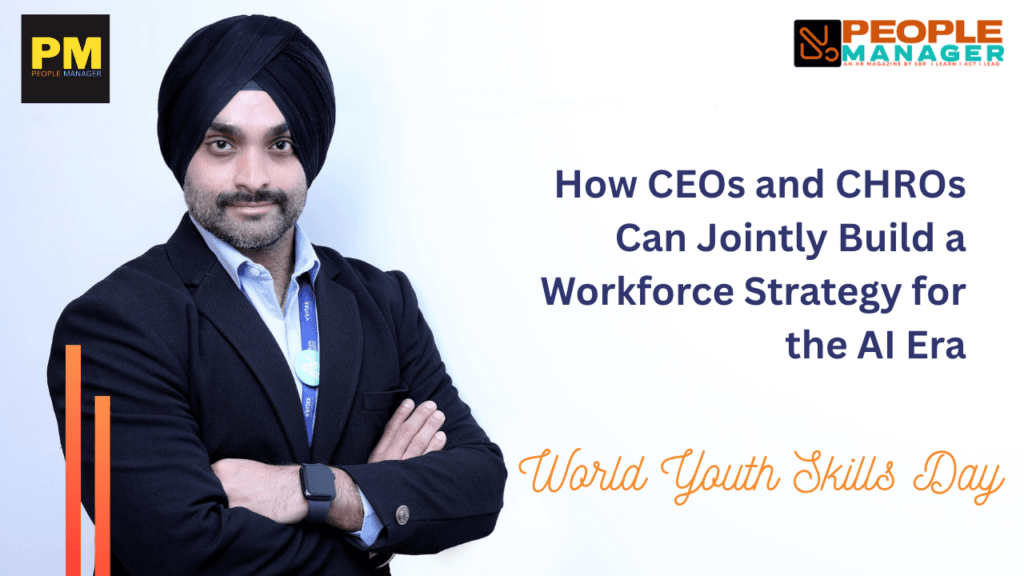
Artificial intelligence is no longer an emerging technology on the horizon; in 2026, it is the force actively rewriting business models, value chains, and the very contract between companies and their employees. As one of the leaders in the technology sector, I have witnessed firsthand how AI’s rapid rise is challenging every assumption about skills, leadership, and organisational culture. For those of us in the C-suite, the question is not whether to embrace AI, but how to build a workforce that can adapt, compete, and thrive in an era of unprecedented disruption. In my view, meeting this challenge demands a new level of partnership between the CEO and Chief Human Resources Officer (CHRO), one where people strategy is as central to the boardroom agenda as product innovation or financial performance.
The pace of change is relentless. According to the World Economic Forum’s “Future of Jobs Report 2026,” AI and related technologies will create approximately 170 million new roles globally while displacing roughly 92 million existing ones. For my own organization and many others, this means the workforce of the future will be fundamentally different from today’s, shaped not only by automation but by the continuous infusion of AI into every process, product, and customer interaction. Meanwhile, as per PwC’s 29th Annual Global CEO Survey, 24% of global CEOs cited technological disruption as a major concern, up four percentage points from last year. These numbers are not abstract; they signal an urgent imperative for leaders like myself to act.
Yet, the reality inside many companies, including those I have led, is that digital ambition often outpaces the organisation’s ability to execute. Too often, the CEO pushes for rapid AI adoption, while the workforce is left to navigate upheaval with insufficient guidance or support. The result is a gap between strategy and execution, between aspiration and capability. Closing this gap is not just a task for HR; it is a test of leadership at the very top.
The End of Siloed Leadership
The era of the CEO as the sole architect of transformation is over. In the AI age, success depends on the CEO and CHRO working in tandem to design, communicate, and deliver a people strategy that is as dynamic as the technology reshaping the business. The CHRO is no longer a support function; they are a strategic co-leader, responsible for ensuring the workforce is as agile and future-ready as the company’s technology stack. This partnership is not about job preservation; it is about capability creation. The CEO must articulate a clear vision for how AI will drive value. The CHRO must translate that vision into action: identifying skills gaps, designing learning journeys, and fostering a culture where experimentation, adaptability, and shared purpose are the norm. Only when both leaders are aligned can the organisation move at speed without leaving its people behind.
A Blueprint for Joint Workforce Strategy
1. Align AI Ambition With Purpose
Every AI initiative must be grounded in the company’s purpose and values. This is not about technology for technology’s sake. The CEO and CHRO must jointly define what AI is meant to achieve, whether it’s delivering superior customer experiences, driving operational excellence, or opening new markets. This alignment is essential for gaining workforce buy-in and for ensuring that transformation is meaningful, not mechanistic. In my own experience, the most successful transformations are those where people understand why the change matters, both for the company and for themselves.
2. Treat Skills Mapping as a Continuous Process
Static job descriptions no longer suffice. The CEO and CHRO should invest in real-time skills mapping, using data analytics to understand where automation will have the greatest impact, which roles are at risk, and where new opportunities are emerging. This approach has allowed my teams to deploy targeted reskilling and create clear pathways for employees whose roles are evolving. Skills mapping should be a living process, updated as technology and strategy evolve.
3. Make Learning a Core Organisational Value
Upskilling and reskilling are no longer HR programs; they are strategic imperatives. Internal digital academies, on-demand learning, and leadership participation in training are now table stakes. The CEO and CHRO must not only provide the tools for learning but model the behaviour themselves. In my leadership journey, I have found that when executives actively engage in learning, it sends a powerful message throughout the organisation.
4. Embed Ethics and Inclusion in AI Deployment
AI systems are only as fair and effective as the values that shape them. The CEO and CHRO should co-lead the development of governance frameworks for algorithmic transparency, bias mitigation, and data stewardship. Upskilling and advancement opportunities must be accessible to all employees, ensuring AI does not create new divides within the workforce. Inclusion is not a checkbox; it must be designed into every initiative. I have seen firsthand how inclusive practices not only improve outcomes but also build trust and morale.
5. Foster Agility Through Organisational Design
The speed of AI-driven change demands agile structures. Project-based squads, internal talent marketplaces, and rotational assignments allow rapid deployment of skills where needed most. This approach accelerates innovation and helps employees see real, immediate opportunities for growth. The CEO and CHRO should champion agility not only in business models, but in how teams are formed, led, and rewarded. In my own organisations, embracing agile design has been a critical enabler of transformation.
6. Prioritise Transparent Communication and Psychological Safety
Change breeds uncertainty. The CEO-CHRO partnership must stand for open, honest, and ongoing communication. Employees should understand not just what is changing, but why, and how they will be supported. Psychological safety, where employees can question, experiment, and even fail without fear, must be a lived value. I make it a priority to regularly engage with employees, listen to their concerns, and create forums for open dialogue. Only with this foundation can creativity and resilience flourish.
7. Measure What Matters and Report Progress
Success in the AI era is measured by outcomes: learning participation, internal mobility, diversity in new roles, and the effectiveness of human-AI collaboration. These metrics should be tracked and reported transparently to employees and the board. Continuous improvement is possible only when progress is visible and shared. In my experience, celebrating milestones and being transparent about setbacks fosters a culture of accountability and progress.
The New Social Contract
The greatest legacy of AI may be the way it redefines the relationship between employer and employee. The new social contract is built on transparency, continuous learning, and shared progress. Employees expect to be brought along on the journey, not left behind. CEOs and CHROs must earn trust not with slogans, but with real investment in people and by ensuring the benefits of AI are broadly shared. Throughout my career, I have seen the power of trust in driving engagement and innovation.
The Leadership Imperative
AI is not just a tool; it is the force reshaping business and society. The CEO-CHRO partnership is now the cornerstone of sustainable success. Together, these leaders must ensure that technology serves strategy, and strategy serves people. In 2026, the difference between those who thrive and those who fall behind will not be access to AI, but the ability to harness it with clarity, empathy, and shared vision. The future of work is being written now, and it requires leaders willing to act together, adapt continuously, and put people at the heart of transformation.
This perspective is informed by my own journey in leading digital transformations and partnering closely with CHROs to ensure our people remain our greatest asset. As we navigate the AI era, I am convinced that the organisations that put people first, through shared leadership, continuous learning, and inclusive growth, will be the ones that define the future.
For further insights into the evolving workplace paradigm, visit

- How CEOs and CHROs Can Jointly Build a Workforce Strategy for the AI Era - July 15, 2026
- Top Hiring Trends to Watch Out for in 2025 - January 3, 2025