Piu Mondal on How TVH India is Scaling Talent and Developing Future Leaders Capabilities for GCC Growth
The future workforce talent will need a combination of strong technical expertise and human capabilities. As business environments continue to evolve, employees must be able to adapt quickly, solve complex problems, collaborate across functions and continuously build new skills. Technical knowledge remains important, but equally critical are communication, analytical thinking, business understanding and the ability to work effectively in global teams.
As Global Capability Centres (GCCs) continue to evolve from operational support units into strategic business hubs, talent has emerged as the defining differentiator. The focus is no longer on scaling headcount alone, but on building specialised capabilities, nurturing leadership from within, and creating an integrated workforce that contributes directly to global business outcomes. This shift is redefining how organisations attract, develop, and retain talent in an increasingly competitive landscape.
At the core of this transformation is a move from execution to ownership. Modern GCCs are empowering employees to lead business-critical initiatives, drive innovation, and collaborate as equal partners with global teams. This requires organisations to look beyond technical expertise, prioritising adaptability, business acumen, cross-cultural collaboration, and problem-solving capabilities that enable professionals to thrive in complex, global environments.
Leadership development has also become a strategic imperative. Rather than relying solely on formal leadership programmes, organisations are creating opportunities through cross-functional projects, innovation initiatives, mentoring, and experiential learning. By identifying high-potential talent early and providing meaningful global exposure, GCCs are strengthening internal leadership pipelines while ensuring business continuity and long-term organisational resilience.
Employee engagement and retention are equally central to the GCC growth story. Product ownership, transparent career pathways, global mobility, and flexible organisational structures are replacing traditional service-delivery models, giving employees greater purpose, visibility, and influence. Combined with a strong culture of trust, well-being, and continuous learning, these initiatives are helping organisations build workplaces where employees remain motivated and invested in long-term careers.
Digital transformation is further accelerating this evolution by enabling data-driven talent management, streamlined HR processes, and more transparent performance frameworks. As GCCs expand in scale and strategic importance, HR technology and analytics are becoming essential tools for identifying future skills, supporting workforce planning, and aligning individual development with evolving business priorities.
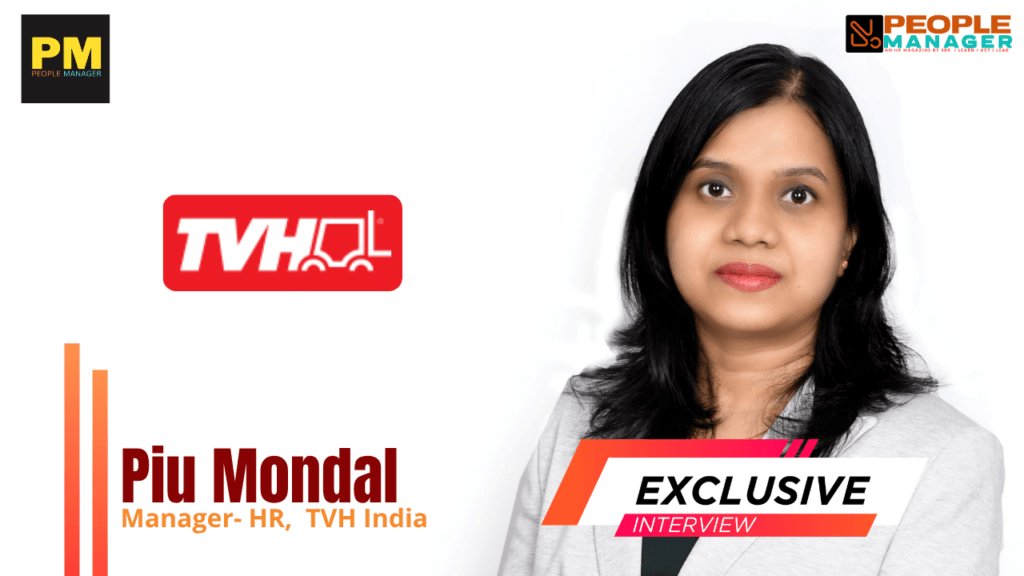
In this conversation with People Manager, Piu Mondal, Head of Human Resources at TVH India, shares how the company’s Pune GCC has evolved into a strategic global hub by combining specialised capability building, leadership development, employee-centric practices, and digital innovation. She explains how TVH is creating a future-ready workforce that not only supports global business growth but also positions India as a key driver of the organisation’s long-term transformation and innovation agenda.
Q.: How is TVH India’s GCC shaping its overall talent strategy, and what differentiates your approach from traditional models of workforce growth?
Piu : TVH India has evolved well beyond the traditional delivery centre model. Today, Pune is recognised as TVH’s third global hub alongside Belgium and the US, making it an integral part of the company’s global operating model. This shift has fundamentally influenced our talent strategy. We are building specialised capabilities across Data, E-commerce & Digital, Market Intelligence, and Technical Services, with teams working as part of global functions rather than supporting them from the sidelines.
The difference lies in the ownership our people have. Our teams are involved in defining solutions, shaping processes, and driving outcomes instead of executing predefined tasks. That requires us to hire for far more than technical expertise. We look for people who demonstrate sound judgement, adaptability, and the ability to collaborate effectively across geographies, cultures, and functions.
Our workforce planning also reflects a long-term perspective. Rather than hiring against immediate delivery requirements, we build talent aligned with multi-year business priorities and capability needs. This creates stronger career pathways for employees while ensuring the organisation develops the expertise required to support its global growth strategy.
Q.: What specific initiatives are you implementing to identify and groom future leaders within the GCC structure?
Piu : Leadership development at TVH India is evolving through a combination of structured learning, experiential opportunities, and continuous feedback, rather than a single, formal leadership track. Initiatives such as the TVH Innovation Challenge provide employees with opportunities to present ideas that can influence business outcomes while helping identify individuals who demonstrate strategic thinking, problem-solving, and initiative beyond their day-to-day responsibilities.
We are also strengthening opportunities for cross-functional exposure through stretch assignments and project-based collaboration, enabling employees to broaden their business understanding, enhance decision-making capabilities, and build confidence in taking on greater responsibilities. Alongside these experiences, people managers play an important role in recognising emerging talent through regular interactions, performance conversations, and day-to-day observations of how individuals collaborate, influence others, and navigate complex challenges.
For a growing GCC, developing leadership internally is a strategic priority. As demand increases for professionals who combine deep functional expertise with leadership capabilities, building this pipeline from within ensures continuity, strengthens organisational capability, and prepares the business for long-term growth.
Q.: GCCs are often seen as centres of excellence. Which specialised capabilities is TVH India prioritising, and how do they align with global business needs?
Piu : TVH India has evolved into a strategic Global Capability Centre that plays an increasingly important role in advancing the company’s global business priorities. Our focus is on building specialised capabilities across three core business pillars. Under the Information (Data) pillar, we are strengthening expertise in Data Analytics, Data Engineering, Data Integration, Artificial Intelligence, and Information Services. The Commercial pillar encompasses E-commerce & Digital, Marketing, and Equipment Engineering, while the Finance pillar focuses on Market Intelligence and Pricing. These capabilities have been intentionally developed to support TVH’s global strategy by enabling data-driven decision-making, accelerating digital transformation, enhancing engineering excellence, and delivering deeper commercial insights.
By leveraging India’s highly skilled talent pool and building on more than 13 years of cross-cultural collaboration, the Pune GCC is taking on broader responsibilities across global initiatives, contributing to product and platform development, and supporting automation and business simplification efforts. This ongoing evolution reflects our commitment to strengthening innovation, operational excellence, and closer collaboration with global teams while supporting TVH’s long-term growth ambitions.
Q.: With retention challenges across industries, how is the GCC model helping TVH India keep employees engaged and motivated?
Piu : The transition to a Global Capability Center (GCC) has not only elevated TVH India’s technical capabilities but has also become a powerful talent retention strategy. At a time when organisations across industries are grappling with high attrition, TVH India has maintained a healthy attrition rate while earning its second Great Place to Work® certification, with an 83% satisfaction score and an impressive 98% participation rate.
A key driver of employee engagement has been our shift from task delivery to product ownership. Unlike the transient client projects common in traditional IT services firms, TVH operates as a product company, where employees take true ownership of global products and co-develop strategic solutions alongside teams in the US and Belgium. This makes their work more intellectually stimulating, meaningful and impactful.
Another important differentiator is our deep global integration. Through a matrix operating model, TVH has eliminated traditional “country silos,” ensuring that employees in India have a genuine “seat at the table.” Rather than functioning as outsourced service providers, they work as equal members of global teams, contributing to strategic decisions and collaborating closely with colleagues worldwide. We also build global exposure into our employee experience by allocating travel budgets that enable in-person onboarding, knowledge exchange and stronger cross-border collaboration.
We complement this with a flexible organisational structure that removes rigid hierarchical layers, giving employees direct access to decision-makers and empowering them to contribute ideas, influence outcomes and drive innovation.
Career growth is another critical pillar of our engagement strategy. Through our “Grow in India” philosophy, supported by a Global Career Architecture, employees have clearly defined internal mobility pathways into senior and leadership roles within India. Upskilling initiatives further enable them to broaden their expertise, diversify their capabilities and build long-term careers with the organisation.
Above all, our people-first culture binds everything together. We have consciously fostered a high-trust, supportive workplace where employees feel respected, valued and empowered. This is reflected in our employee survey ratings of 99% for safety and security and 91% for community. We also actively promote work-life balance through holistic well-being initiatives, including sports, yoga and volunteering programmes, ensuring our people remain engaged, motivated and connected to our shared purpose.
Q.: How do you ensure that workplace culture within the GCC remains consistent with TVH India’s global values while adapting to local realities?
Piu : At TVH, our culture is anchored in the principle of “We Are One,” which reflects the belief that Pune, Belgium, and the US are equal parts of one global organisation. This is more than a guiding philosophy. It shapes how we collaborate, recognise contributions, and make decisions across locations. Our teams participate in shared recognition programmes, work across global functions, and contribute to the same leadership discussions and business priorities as colleagues worldwide.
While our values remain consistent across the organisation, we recognise that culture must also reflect local realities. Employee engagement initiatives, learning programmes, celebrations, and communication styles are designed to resonate with our workforce in India while staying aligned with TVH’s core values of collaboration, customer focus, reliability, and continuous improvement.
This approach is reflected in the workplace we have built. In 2026, TVH India earned its second Great Place to Work® certification, with an 83% overall satisfaction score and an exceptional 98% participation rate, reinforcing the trust, learning culture, and sense of belonging that our employees experience every day.
TVH India’s journey continues to evolve. What began as a small back office has grown into a Global Capability Centre that plays a strategic role in shaping the company’s future. Continuous collaboration with global teams, regular leadership interactions, and shared ownership of business outcomes ensure our culture remains consistent across geographies while embracing the strengths of our local talent.
Q.: What role does digital transformation—particularly HR tech and analytics—play in scaling talent and building capabilities within the GCC?
Piu : Digital transformation is playing an increasingly important role in helping GCCs build scalable and consistent people practices. As organisations expand, HR technology simplifies and standardises key processes across recruitment, onboarding, learning and performance management, creating a more seamless employee experience while improving operational efficiency. At TVH India, these digital platforms enable us to manage talent more effectively as the organisation continues to grow.
Beyond streamlining processes, technology also supports better decision-making. We leverage digital tools for goal setting, performance tracking and dashboards that give managers real-time visibility into progress and outcomes. This helps foster greater alignment between individual objectives and business priorities, encourages continuous performance conversations, and promotes a more transparent and objective performance culture. As our GCC evolves, these digital capabilities will continue to strengthen talent management and support long-term capability building.
Q.: What skills do you see as most critical for the future workforce, and how is the GCC preparing employees to meet those demands?
Piu : The future workforce will need a combination of strong technical expertise and human capabilities. As business environments continue to evolve, employees must be able to adapt quickly, solve complex problems, collaborate across functions and continuously build new skills. Technical knowledge remains important, but equally critical are communication, analytical thinking, business understanding and the ability to work effectively in global teams.
At TVH India, we focus on creating opportunities that help employees build these capabilities throughout their careers. Learning and development programmes, mentoring, exposure to cross-functional projects and collaboration with global teams enable employees to expand their expertise while gaining a broader understanding of the business. Employees are encouraged to take ownership of their development and continuously strengthen their skills to meet changing business requirements.
Preparing for the future also means fostering a culture of curiosity and continuous learning. By providing meaningful experiences and opportunities to work on business-critical initiatives, we help employees build the confidence and capabilities needed to take on larger responsibilities. This approach ensures our workforce remains agile, adaptable and well equipped to support both current business priorities and future organisational growth.
Q.: How do you measure the success of the GCC in terms of talent outcomes, leadership readiness, and business performance?
Piu : We evaluate the success of our Pune Global Capability Center (GCC) through quantitative metrics with qualitative milestones across three key dimensions: talent outcomes, leadership readiness and business performance.
From a talent perspective, our focus is on building a highly engaged, stable and future-ready workforce. We benchmark employee experience through independent assessments such as Great Place to Work®, where TVH India achieved an 83% Trust Index score with a 98% participation rate. The results also reflected exceptionally strong employee sentiment, with scores of 99% for safety and security and 91% for community.
Leadership readiness is equally important to our long-term success. We closely track the onboarding and development of local Directors and Team Leads, ensuring they are fully integrated into TVH’s global operating model. This is supported by structured virtual onboarding programmes and in-person training milestones at our headquarters in Belgium, enabling leaders to build strong global relationships while aligning with the company’s culture and strategic priorities.
From a business perspective, we measure success by the strategic value our GCC delivers to the global organisation. This includes taking end-to-end ownership of complex global systems that are executed exclusively from India, demonstrating the maturity and trust placed in our teams. We also assess our ability to simplify and automate business processes, moving beyond manual execution to drive greater efficiency and innovation. Ultimately, the GCC’s performance is measured by its contribution to TVH’s global business strategy, including scaling digital marketing, eCommerce, the global data backbone and other critical capabilities that support the company’s long-term growth.
Q.: Looking forward, how do you see TVH India’s GCC evolving over the next five years in terms of scale, scope, and strategic importance?
Piu : Over the next five years, we see TVH India’s GCC continuing to grow in both capability and strategic importance. While growth in scale will remain important, our primary focus will be on strengthening specialised expertise and taking on more complex responsibilities that support the company’s global priorities. As the business evolves, the GCC will continue to play a larger role in driving innovation, improving operational excellence and supporting enterprise-wide transformation.
We also expect greater collaboration across global teams, with employees contributing to initiatives that require deep functional knowledge and close partnership across regions. This will create more opportunities for learning, leadership development and cross-functional exposure, enabling employees to build broader business perspectives while delivering value to the organisation.
Developing future-ready talent will remain central to this evolution. By investing in continuous learning, leadership development and capability building, we aim to create a workforce that is equipped to support changing business needs. Our vision is to strengthen the GCC as a trusted global partner that combines specialised expertise with strong collaboration, helping TVH achieve its long-term business objectives while providing meaningful career opportunities for our people. For further insights into the evolving workplace paradigm, visit

- Shilpa Kalathur on Plugging the ‘Leaky Pipeline’ via Flexible Tech Ecosystems - October 10, 2026
- Ashish Gupta on Employee Benefits : Are they Ready for the “Sandwich Generation”? - October 10, 2026
- Zypp Electric Expands Employee Ownership with ₹11 Crore ESOP Allocation - October 2, 2026