
Equal Pay for Equal Work Cannot Be Applied Mechanically: Supreme Court
The ruling carries significant implications for service jurisprudence. It reinforces the principle that pay structures must reflect not only the nature of duties but also the value of prior experience and the mode of recruitment Equal Pay for Equal Work.
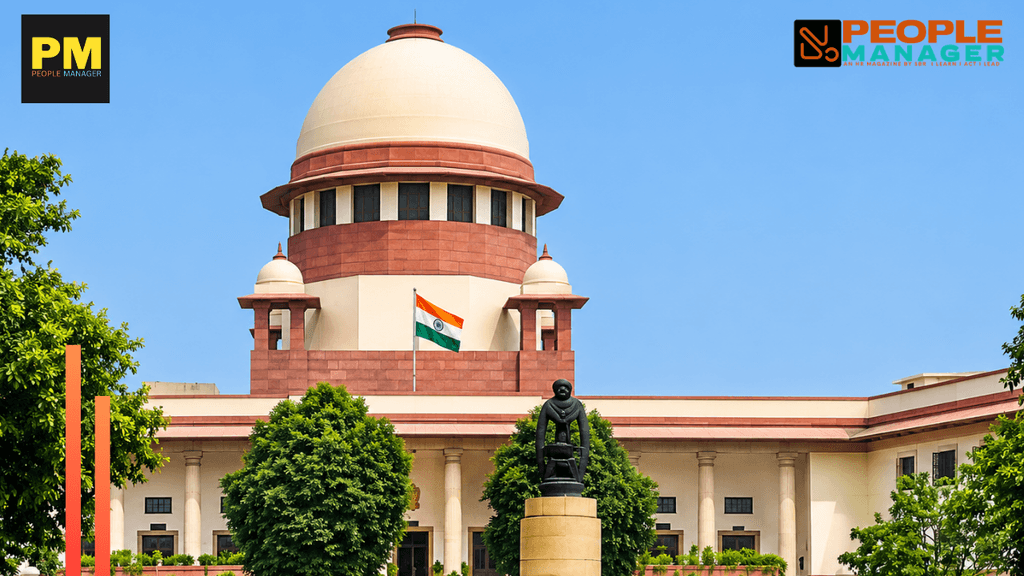
The Supreme Court of India recently held that the principle of equal pay for equal work cannot be applied in a mechanical manner without considering the broader context of employment. In its judgment delivered on September 8, 2026, in G.P. Sangeetha & Ors. v. State of Kerala & Ors., a bench comprising Justice Dipankar Datta and Justice Sheel Nagu held that direct recruits to the post of Higher Secondary School Teacher (Junior) in Kerala could not claim parity in pay with those appointed through promotion or transfer. The Court emphasized that while both categories of teachers may share similar qualifications and perform comparable duties, the promoted teachers carried with them prior service experience as full‑time permanent high school teachers, which constituted a legitimate basis for differentiation in pay scales.
The Court reiterated that the doctrine of equal pay for equal work, though rooted in Article 14 of the Constitution and reinforced by Article 39(d), must be applied with caution. It is not sufficient to demonstrate similarity in duties alone; rather, the assessment must extend to qualifications, experience, recruitment source, and the responsibilities attached to the post. The Court observed that wholesale parity cannot be claimed unless there is complete equivalence across all relevant factors. In doing so, the bench relied on precedents such as State of Haryana v. Tilak Raj, State of Haryana v. Charanjit Singh, Govt. of West Bengal v. Tarun Kumar Roy, and State of Bihar v. Bihar Secondary Teachers Struggle Committee, which collectively establish that rational classification based on merit, experience, or qualifications is permissible under service law.
The ruling carries significant implications for service jurisprudence. It reinforces the principle that pay structures must reflect not only the nature of duties but also the value of prior experience and the mode of recruitment. For employees, the judgment underscores the burden of proof in establishing parity, requiring demonstration of equivalence in all aspects of employment. For employers, particularly in the public sector, it provides judicial support for differentiated pay scales where distinctions are rational and connected to organizational objectives.
From a humanized legal perspective, the judgment balances fairness with practicality. It acknowledges that while equality in pay is a constitutional aspiration, it cannot be reduced to arithmetic. The lived reality of employment involves differences in career trajectories, responsibilities, and accumulated experience, all of which legitimately influence compensation. For teachers, the Court’s reasoning affirms that years spent in classrooms before promotion carry weight in determining pay. For direct recruits, it signals that while they may perform similar tasks, their entry point and career path differ, and pay structures can reflect that distinction.
The judgment also highlights potential challenges. Employers must ensure that distinctions in pay are not arbitrary or discriminatory, as misuse of this principle could undermine employee morale. Employees, on the other hand, face the challenge of navigating complex evidentiary requirements to establish claims of parity. Courts will continue to play a critical role in balancing constitutional equality with administrative practicality, ensuring that the doctrine of equal pay remains a shield against exploitation but not a blunt instrument.
In conclusion, the Supreme Court’s ruling refines the application of equal pay for equal work in Indian service law. It ensures that the principle remains rooted in fairness and constitutional values while accommodating the practical realities of employment. By recognizing that equality in pay is not about identical tasks but about equal value in employment conditions, the Court has provided a nuanced framework that will guide future disputes in service jurisprudence. This interpretation ensures that justice in matters of pay parity is not mechanical but contextual, preserving both the dignity of workers and the integrity of organizational structures. For further insights into the evolving workplace paradigm, visit

- Equal Pay for Equal Work Cannot Be Applied Mechanically: Supreme Court - October 3, 2026
- Isgec Heavy Engineering Appoints Mahua Chakrabarty as Chief Human Resources Officer - October 3, 2026
- Long Service Alone Does Not Create Employer-Employee Relationship; Outsourced Workers Cannot Be Regularised: P&H HC - October 2, 2026