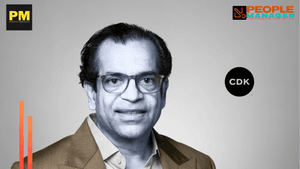
Ashish Gupta on Employee Benefits : Are they Ready for the “Sandwich Generation”?
Future benefits will therefore need to go beyond traditional compensation and include flexible start and end timings, eldercare support, parental healthcare assistance, medical emergency support, mental wellbeing programs and greater flexibility at the time of caregiving emergencies.

As organizations navigate changing workforce demographics, rising caregiving responsibilities, and evolving employee expectations, traditional employee benefits are being challenged to address a more complex reality. The focus is shifting from conventional compensation packages towards a family-centric benefits ecosystem that recognizes employees’ responsibilities beyond the workplace.
At the heart of this transformation is the growing significance of the “sandwich generation”—working professionals balancing their careers while caring for both their children and ageing parents. These employees face overlapping financial commitments, healthcare responsibilities, emotional pressures, and time constraints that conventional benefits may not adequately address.
This calls for HR and finance leaders to rethink how employee benefits are designed, delivered, and measured. Beyond salary, provident fund contributions, and standard medical insurance, organizations must explore parental healthcare coverage, eldercare assistance, childcare support, financial planning, emergency medical assistance, mental wellbeing services, and flexible working arrangements. The objective is to create benefits that respond to employees’ real-life challenges while sustaining organizational productivity.
Equally important is the need to balance personalization with financial sustainability. Organizations must evaluate benefits not merely as additional expenditure, but as potential investments in employee engagement, workforce resilience, retention, and productivity. Managerial sensitivity and a supportive workplace culture are essential to ensuring employees can manage caregiving responsibilities without fear of professional disadvantage.
In this conversation with People Manager, Ashish Gupta, Finance Head at CHL Urja, explores how organizations can redesign employee benefits to support the sandwich generation. The discussion highlights the need to move beyond individual-centric benefits towards a flexible, inclusive, and family-oriented approach that strengthens employee wellbeing and long-term organizational effectiveness.
Q. : Defining the Sandwich Generation How do you define the “sandwich generation” in today’s workforce, and why is it becoming a critical demographic for HR and finance leaders?
Answer: The sandwich generation is a term used to describe working adults who are trying to juggle their careers and care for both their children and their aging parents or other dependent family members. In practice this group tends to be concentrated in the 30-50 year old age bracket although these responsibilities can extend well beyond this.
HR and finance leaders should recognize that this demographic is particularly critical as their responsibilities extend beyond providing financial support. They are juggling their time, attention, health care responsibilities and emotional commitments across multiple generations and still meeting professional expectations.
Historically, employee pay and benefits were largely tailored to individual needs. But, in today’s world, there is a greater focus on how organizations take into account their families’ overall wellbeing and financial commitments as part of the benefits ecosystem.
An employee may be well paid, have health insurance and retirement benefits but may feel that the organisation’s system of remuneration does not adequately reward the responsibilities that consume a large part of his/her time and financial resources. With this demographic on the rise, organizations will need to understand that supporting employees is increasingly about looking at the broader family ecosystem around them.
Q. : Employees balancing care for both children and aging parents face unique challenges. How do these pressures influence their expectations of workplace benefits?
Answer: Traditionally, corporates and organisations have developed benefits such as medical insurance, maternity benefits and various health and wellness programmes, but eldercare has received comparatively less weightage and structured attention. A conventional corporate health policy may cover the employee, spouse and children, while the employee may be spending substantial time dealing with an elderly parent’s healthcare needs.
Employees are increasingly shifting their expectations from “benefits for me” to “benefits that support my family ecosystem.” For example, earlier group insurance policies may have covered employees, spouses and children, but employees may now also want their parents to be included, recognising the importance of their parents’ health and wellbeing. This could also extend to mental health support for the family and financial planning in case of an emergency.
Therefore, the perceived value of benefits is increasingly becoming a combination of the employee + children + ageing parents + career + physical and mental wellbeing + financial responsibilities and commitments.
Q. : From a finance perspective, what gaps exist in current employee benefit structures when it comes to supporting this generation’s financial responsibilities?
Answer: India has already undergone major structural changes through the Labour Codes and revisions in minimum wages, among other developments. From a regulatory standpoint, India is already going through a significant period of employee-benefit transformation. However, I would not currently describe India as having an announced comprehensive statutory “sandwich generation employee-benefits reform.”
At the same time, I would say that there is still a gap in the current employee-benefit structure. It generally protects employees and their families against specific risks but does not adequately help employees manage the cash-flow burden created by multiple family responsibilities, particularly healthcare and medical requirements.
Traditional corporate benefits largely concentrate on EPF, medical insurance, bonuses or incentives, and some financial or wellness education. However, they do not necessarily answer an employee’s biggest financial question: “How do I fund my children’s education, support my parents, pay for their healthcare, manage my home loan and still accumulate enough for my own retirement?”
Some additional benefits may therefore be required to help employees manage their future financial responsibilities. Benefits such as family mental wellbeing support, flexibility in work structures, eldercare and childcare support can eventually contribute to a much broader employee-benefit ecosystem.
Q. : How important are flexible work arrangements and caregiving leave policies in addressing the needs of employees caught between dual caregiving roles?
Answer: I would say it is the need of the hour to include greater flexibility within employee benefits. This does not necessarily mean “work from home,” since not every organisation has the systems or operational structure to support it. However, some flexibility can be added to the basket, such as flexible start and end times, caregiving hours and emergency flexibility. In short, organisations should give employees the flexibility to manage family needs while also allowing them to remain productive.
For employees simultaneously caring for children and ageing parents, a family-oriented employee-benefit structure could combine flexibility with eldercare, financial support and mental health support. Without flexibility, employees may have to take additional leave or repeatedly ask their managers for exceptions. This can affect work efficiency and ultimately impact business operations and productivity.
Employee benefits should gradually move from “what the company gives me” to “how the company helps me manage my life.” The sandwich generation sits right at the centre of that transformation.
Q. : Do traditional healthcare benefits adequately support employees managing multi-generational care, or do organizations need to rethink coverage models?
Answer: Many big corporations and MNC’s already have systems in place where the employee benefit structures have evolved to include aspects of parental healthcare, mental well-being. But macro-level organizations have usually favored group plans that primarily covered employees and their immediate families, especially spouses and children.
As more employees juggle the health care needs of children and aging parents at the same time, organizations must ask if current coverage models actually mirror an employee’s real family obligations. Increasingly the benefits package includes parental health insurance, medical emergency assistance, support for preventive healthcare and access to reliable healthcare advice.
Many organizations also have employee assistance programs and health awareness programs. They raise awareness about physical and mental health but information or few counseling sessions may not be enough to address the core of the problem of caregiving.
The next step could be to move from health care benefits centered on the individual employee to a family-centered approach. Assisting staff with the healthcare needs of their older parents can reduce uncertainty and help them more effectively balance work and care.
Q. : What role should mental health support play in benefit programs tailored to the sandwich generation, given the emotional toll of caregiving?
Answer: Mental health support must be treated as a core component not only for sandwich-generation working adults but for every employee. The distinction is that sandwich-generation employees are dealing with simultaneous emotional and time pressures arising from caring for children and ageing parents while maintaining their careers.
A sandwich-generation employee may feel guilty about spending time at work instead of being with parents or children who need them. They may also experience financial stress from supporting two generations simultaneously, emotional exhaustion while managing medical emergencies, and a lack of personal time and social life.
This requires an important conceptual shift from “individual wellbeing” to “family wellbeing.” Most sandwich-generation employees carry the caregiving and emotional support burden of their parents and children simultaneously. Organisations and corporations could consider additional benefits such as family and relationship counselling, stress management support, anxiety management and caregiving coaching. This can help employees understand that they are not alone in dealing with these situations.
If an employer addresses only the psychological symptoms but not the underlying caregiving problem, the intervention remains incomplete. This is important because mental stress often originates from practical challenges.
There is also a hidden aspect to this issue. Taking leave repeatedly for caregiving responsibilities may create a fear in employees’ minds about how their managers or leaders will perceive them and whether they will be seen as less committed to their roles. Therefore, this shift should also come from managerial and leadership culture. Organisations should train senior executives and managers to recognise caregiving pressures at an early stage and create an environment in which employees can discuss genuine caregiving challenges without fearing negative professional consequences.
Q. : Beyond salary, what practical benefits—like childcare support, eldercare assistance, or financial planning services—can make a tangible difference?
Answer: I would say that, along with monetary compensation, the sandwich-generation workforce primarily needs greater flexibility around family mental and physical healthcare, childcare support, and financial planning for emergency healthcare and medical requirements. Therefore, some additions to the traditional employee compensation structure could help employees manage stressful situations while remaining productive at the workplace.
A future-oriented employee-benefit structure could include elements such as eldercare, medical emergency assistance and flexible working arrangements. Organisations could potentially develop employee-benefit programmes that are more family-centric rather than merely individual-centric.
This could include financial planning, emergency care funds, parental health insurance, medical navigation, confidential counselling, flexible work timings, remote working during emergencies and workload adjustments. Together, these can create a more complete caregiving ecosystem rather than simply an employee compensation and benefits scheme.
This is particularly relevant for experienced employees in the 35–55 age range, who often hold significant organisational knowledge and leadership responsibilities.
Q. : How do cultural differences across regions shape the way organizations should design benefits for employees in the sandwich generation?
Answer: Cultural differences are an important factor when designing employee-benefit structures. In India, working adults generally have substantial financial and caregiving responsibilities towards their parents, who may continue to live with or near them. In other markets, older parents may be more likely to live independently, use formal care services or live in a different geographical location.
A benefit that works well in one market may not be equally relevant or effectively utilised in another. This means the same benefit package can produce very different outcomes.
The important point is that parents may not always be financially dependent in the conventional sense, but an employee may still have substantial responsibility for their healthcare, housing, safety and overall wellbeing. Therefore, eligibility based only on the traditional definition of a “dependent” can miss a significant part of an employee’s actual caregiving burden.
Cultural differences also mean that companies should avoid assuming that everyone wants the same kind of care. Instead, companies could consider providing a flexible caregiving wallet. Organisations can standardise the purpose of a benefit while customising its delivery according to employees’ needs across different cultures, helping improve its utilisation and overall effectiveness.
Flexible leave and working arrangements can also be more culturally adaptable than simply increasing the number of annual leave days. A useful framework could be “Global Care with a Local and Personal Layer.” This can provide organisations with meaningful consistency without ignoring cultural realities.
Q. : From a business standpoint, how can investing in sandwich generation–friendly benefits improve retention, engagement, and overall productivity?
Answer: Investing in sandwich generation-friendly benefits would certainly create an additional financial consideration for HR and the organisation. However, companies should also view it as an investment in workforce resilience. Reducing employees’ administrative and caregiving burdens can eventually translate into higher efficiency and productivity.
The HR conversation could evolve from “What benefits do we offer our employees?” to “What problems are our employees facing at this stage of life?” For example, at 25–30, employees may be more focused on wellness and financial planning; at 35–45, they may be concerned about childcare, eldercare and financial commitments; and at 55, their priorities may shift towards health, retirement planning and community support.
Organisations that recognise this structure should not only measure the additional cost but also assess the potential benefits through lower attrition costs resulting from higher retention, reduced absenteeism, stronger employee engagement and productivity, lower workplace stress and better utilisation of employee resources.
A CFO may initially see this structure as an additional cost to the company, but the future approach could be to view it as an investment in financial and workforce resilience. Organisations could potentially measure benefit ROI by comparing the amount spent on employee benefits with the value generated through lower attrition, higher productivity and better employee engagement.
Importantly, this should not simply become a model of providing more leave. Increasing leave alone can become expensive and may also create workload challenges for teams.
The proposition for corporations and organisations would eventually be: “Supporting your employees’ parents is also supporting your employees.”
Q. : Looking ahead, what innovations or policy shifts do you foresee in employee benefits that will better serve this growing segment of the workforce?
Answer: Looking ahead, I expect employee benefits for the sandwich generation to move from a traditional benefits model—PF, medical insurance, leaves and wellness—to a broader *family-centric model*, where employers help employees manage the financial, emotional and practical consequences of caring for two generations.
This is particularly the case in India, with its increasing elderly population . The government estimates the 60+ population will increase to 23 crore by 2036. At the same time, employees have to increasingly juggle their careers with responsibilities relating to children, aging parents, healthcare costs and their own long-term financial planning.
Future benefits will therefore need to go beyond traditional compensation and include flexible start and end timings, eldercare support, parental healthcare assistance, medical emergency support, mental wellbeing programs and greater flexibility at the time of caregiving emergencies.
Signs of this transition are already visible in many countries, MNCs and large corporations and the next phase in India I expect to be more visible first in metro cities and progressive employers.
I do not presume that a statutory framework nationwide specifically for the sandwich generation is on the horizon. But organizations do not necessarily have to wait for regulation. To start, employers need to understand that employees have different responsibilities at different times in their lives, and to build more flexibility into their benefit structures. Over time, the change could be from asking “What benefits do we provide?” to “What life-stage challenges are our employees trying to manage?”. This could be next evolution of employee benefits in India. For further insights into the evolving workplace paradigm, visit

- Shilpa Kalathur on Plugging the ‘Leaky Pipeline’ via Flexible Tech Ecosystems - October 10, 2026
- Ashish Gupta on Employee Benefits : Are they Ready for the “Sandwich Generation”? - October 10, 2026
- Zypp Electric Expands Employee Ownership with ₹11 Crore ESOP Allocation - October 2, 2026