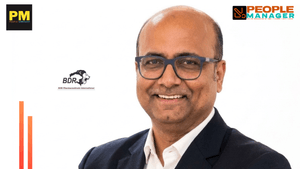

Raymond Appoints Sarita Tripathi as CHRO for Aerospace and Precision Engineering
Sarita Tripathi mandate will be to address these challenges by building a workforce that is agile, skilled, and aligned with Raymond’s vision. Her focus on leadership depth and future capabilities suggests a strong emphasis on succession planning and skill development.

Raymond, a name synonymous with quality and innovation in textiles and engineering, has made a decisive move in strengthening its leadership bench. The company has appointed Sarita Tripathi as Chief Human Resources Officer (CHRO) for its aerospace and precision engineering business. This appointment is not just another leadership shuffle—it is a case study in how global organizations are reimagining HR leadership for industries where talent, innovation, and compliance define competitive advantage.
Tripathi’s career trajectory offers valuable lessons for HR professionals, business leaders, and organizations navigating transformation. Her journey across sectors, geographies, and cultures illustrates the evolving role of HR—from transactional operations to strategic leadership. This article unpacks her career milestones, the implications of her appointment, and the broader lessons HR leaders can draw from her story.
Sarita Tripathi’s professional journey began in 2000 at Johnson Matthey, where she served as head of HR. Starting her career in a leadership role set the tone for her future—she was not just managing processes but shaping organizational culture.
Her next move to Mitsubishi Electric in 2003 as HR business partner marked her entry into a multinational environment. Here, she honed her ability to align HR practices with business strategy, a skill that would become central to her later roles.
By 2007, Tripathi had joined CNH Industrial as head of talent, compensation, and benefits for Asia Pacific. This role expanded her scope beyond India, giving her exposure to diverse markets and workforce dynamics. Her on-site experience in Thailand added a layer of cultural adaptability—an essential trait for HR leaders in global organizations.
In 2011, Tripathi moved to Topaz Energy and Marine in Dubai as group head of compensation and benefits for Caspian, MENA, and global locations. This role demanded agility in managing compensation frameworks across regions with vastly different labor laws and cultural expectations.
Her return to India in 2012 saw her join Tata Motors as AGM and head HR operations for commercial vehicles. Within three years, she was elevated to head HR for the passenger vehicles business unit, pan India. At Tata Motors, she managed large-scale workforce transitions, balancing operational efficiency with employee engagement—a challenge familiar to HR leaders in manufacturing.
Tripathi’s next chapter unfolded at Vodafone, where she was appointed vice president and head of HR for Maharashtra and Goa. Her promotion to vice president HR for mergers and acquisitions, talent, and later culture, diversity & inclusion, and communications at Vodafone Idea highlighted her versatility. She was no longer just an HR leader; she was a transformation architect, steering people strategy during one of India’s largest telecom mergers.
From 2021 to 2023, Tripathi served as vice president and head HR for financial services at Capgemini, overseeing 41,000 employees across five business units. This role underscored her ability to manage scale, complexity, and digital transformation in a sector where employee experience is as critical as technical expertise.
Her most recent role as CHRO at Finolex Industries in 2023 further cemented her reputation as a leader who thrives in diverse industries. At Finolex, she focused on aligning HR strategy with business growth, ensuring that talent pipelines supported organizational expansion.
Raymond’s aerospace and precision engineering business operates in a sector where quality, innovation, and talent are non-negotiable. By appointing Tripathi, the company signals its intent to integrate HR leadership into its core business strategy.
In her social media post announcing the move, Tripathi emphasized her focus on “integration, growth acceleration, leadership depth, future capabilities, and a culture that drives performance at scale.” These priorities reflect the challenges facing aerospace and precision engineering:
- Integration: Aligning HR practices across global operations and ensuring seamless collaboration between engineering and business functions.
- Growth Acceleration: Building talent pipelines that can support rapid expansion in a competitive industry.
- Leadership Depth: Developing leaders who can navigate technological disruption and global competition.
- Future Capabilities: Investing in skills for tomorrow—digital engineering, AI, sustainability, and advanced manufacturing.
- Culture at Scale: Creating a performance-driven culture that balances innovation with compliance and employee well-being.
Raymond’s aerospace and precision engineering business operates in a sector where talent is as critical as technology. The industry faces challenges such as:
- Skill Shortages: Advanced engineering requires specialized skills that are in short supply.
- Global Competition: Companies must attract and retain talent in a fiercely competitive market.
- Regulatory Compliance: Aerospace demands strict adherence to safety and quality standards.
- Innovation Pressure: Continuous innovation is essential to stay ahead.
Tripathi’s mandate will be to address these challenges by building a workforce that is agile, skilled, and aligned with Raymond’s vision. Her focus on leadership depth and future capabilities suggests a strong emphasis on succession planning and skill development. For further insights into the evolving workplace paradigm, visit

- India’s White-Collar Hiring Market Climbs 14% in August 2026 : Report - September 9, 2026
- EPFO Urges Employers to Resolve Long-Pending EPF Damages Under VISHWAS 2026 - September 7, 2026
- India to Adopt IST as Sole Legal Reference for HR, workplace and administrative operations from 2027 - September 2, 2026