Viplav Bhatt on Mukand Limited’s Journey to Building Organisational Capabilities for a Changing Industry Landscape
At Mukand Limited Technology plays a critical role in driving standardization and governance across multiple locations. Centralized HR systems ensure uniform policy implementation, real-time reporting, and stronger compliance control. Digitized workflows for approvals, documentation, and employee queries have improved turnaround time and employee experience while ensuring traceability and audit readiness
As regulatory environments grow more complex and digital disruption reshapes the world of work, HR is being called upon to evolve from a compliance custodian to a strategic architect of organizational resilience. In manufacturing-led enterprises, where scale, safety, and statutory accountability intersect, the strength of HR systems and governance frameworks increasingly defines an organization’s ability to sustain growth, credibility, and workforce trust. Compliance today is no longer a reactive function—it is a forward-looking capability that must anticipate change, enable agility, and reinforce ethical leadership.
Mukand Limited’s journey reflects this shift in thinking. By embedding digitalization, standardization, and preventive governance into its HR ecosystem, the organization has reimagined compliance as an enabler of operational excellence and employee confidence. Technology-led HR platforms, real-time compliance tracking, and audit-ready processes form the backbone of this transformation, while continuous capability building ensures that managers and employees alike understand the intent behind regulatory requirements—not just the rules themselves. Equally critical is the balance Mukand strikes between operational rigor and human experience, ensuring that strong systems remain accessible, transparent, and supportive on the ground.
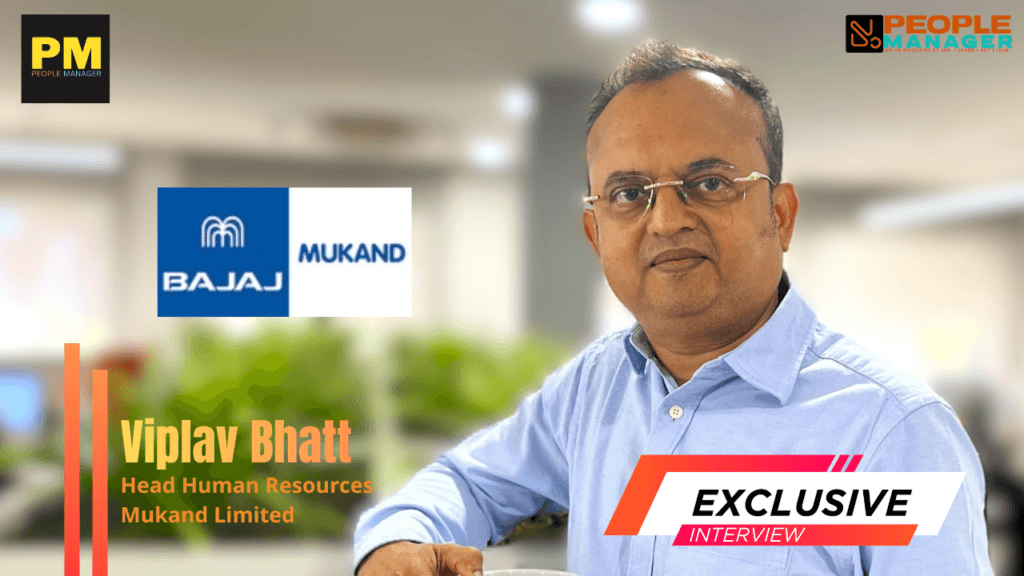
In this in-depth conversation with People Manager, Mr. Viplav Bhatt, Head of HR at Mukand Limited, shares how leadership ownership, digital maturity, and a preventive mindset are shaping the organization’s approach to compliance and HR transformation. He offers insights into benchmarking against global standards, preparing for emerging labour codes and ESG expectations, and building a culture where compliance is viewed as a shared responsibility rather than an imposed mandate. Together, these perspectives underscore a powerful message for HR leaders globally: sustainable transformation is achieved when governance, technology, and people strategy converge with purpose.
Q.: Mr. Bhatt, how does Mukand Limited ensure its HR systems and compliance frameworks remain aligned with evolving industry needs?
Ans.: Mukand Limited ensures that its HR systems and compliance frameworks remain aligned with evolving industry requirements through a structured and proactive approach. The company periodically reviews and updates its HR policies and processes in line with changes in labour laws, statutory requirements, and industry best practices by attending seminars, conferences, summits etc. Regular internal audits, compliance checks, and consultations with legal and HR experts are undertaken to ensure adherence to regulatory standards.
In addition, Mukand Limited leverages digital HR systems to improve accuracy, transparency, and efficiency in employee data management, payroll, and statutory reporting. Continuous engagement with business leaders, employee feedback mechanisms, and benchmarking against peer organizations further help in refining HR practices. This integrated approach enables Mukand Limited to remain compliant, responsive to change, and aligned with both business objectives and evolving industry expectations.
Q.: With regulatory landscapes constantly changing, what proactive steps has Mukand taken to strengthen compliance readiness across its operations?
Ans.: With the regulatory landscape continuously evolving, Mukand Limited has adopted a proactive and structured approach to strengthen compliance readiness across its operations. The company closely monitors changes in labour laws, statutory regulations, and government notifications, and promptly translates these changes into updated internal policies, SOPs, and operating guidelines.
Mukand Limited conducts regular compliance audits, internal reviews, and statutory checks to identify and address gaps well in advance. Focused training and awareness sessions are organized for HR teams, line managers, and key stakeholders to ensure correct interpretation and implementation of regulatory requirements at the plant and corporate levels. Robust documentation, standardized processes, and the use of digital HR and compliance tracking systems further enhance accuracy and audit readiness. Through these measures, Mukand Limited ensures consistent compliance, minimizes risk, and maintains strong governance across all locations.
Q.: How is digitalization reshaping HR processes at Mukand, and what role does technology play in driving transformation initiatives?
Ans.: Digitalization has become a key enabler of HR transformation at Mukand Limited, helping the function move towards greater efficiency, transparency, and strategic value addition. Mukand has progressively adopted digital HR platforms to streamline core processes such as employee lifecycle management, payroll, statutory compliance, attendance, and performance management, thereby reducing manual intervention and enhancing data accuracy.
Technology plays a critical role in driving standardization and governance across multiple locations. Centralized HR systems ensure uniform policy implementation, real-time reporting, and stronger compliance control. Digitized workflows for approvals, documentation, and employee queries have improved turnaround time and employee experience while ensuring traceability and audit readiness.
In addition, Mukand Limited leverages HR analytics and interactive dashboards to enable informed decision-making, effective workforce planning, and productivity analysis. Digital tools have automated key HR workflows such as confirmations, transfers, attendance management, and related approvals, providing employees with seamless access to HR services through a user-friendly mobile application.
The system incorporates advanced features including face-recognition–based attendance, system-generated pre-defined functional goals, performance management modules, recruitment tracking, and easy access to HR policies. This ensures a consistent and standardized employee experience while streamlining HR operations across departments and locations.
These digital platforms also support compliance tracking, training and development records, and employee engagement initiatives, allowing HR teams to move away from transactional processing and focus more on strategic, value-added, and transformation-led initiatives. Overall, digitalization at Mukand Limited serves as a strong catalyst for operational excellence, enhanced compliance, and sustained organizational transformation.
Q.: In strengthening systems, how do you balance operational rigor with employee experience and engagement?
Ans.: At Mukand Limited, strengthening systems is approached with a conscious balance between operational rigor and a positive employee experience. While robust processes, controls, and compliance frameworks are essential for governance and consistency, equal emphasis is placed on ensuring that these systems remain employee-friendly and enabling rather than restrictive.
Mukand designs its HR policies and digital processes to be clear, transparent, and easy to navigate, minimizing ambiguity and reducing administrative friction for employees and managers. Wherever possible, manual and repetitive tasks are automated, allowing employees to focus on value-adding work and enabling quicker resolution of HR-related requests.
Employee engagement and feedback mechanisms play a critical role in this balance. Inputs from employees, unions, and line managers are actively considered while refining processes, ensuring that operational discipline does not come at the cost of morale or trust. At the plant level, HR and IR teams maintain close engagement with the workforce to address concerns proactively and preserve healthy industrial relations.
By combining strong governance, thoughtful process design, digital enablement, and continuous employee dialogue, Mukand Limited ensures that operational rigor supports—not hinders—employee engagement, productivity, and organizational commitment.
Q.: Could you share how Mukand ensures audit-ready practices in HR and compliance, especially in a manufacturing-heavy environment?
Ans.: Mukand Limited ensures audit-ready HR and compliance practices through a disciplined, standardized, and technology-enabled approach, which is especially critical in a manufacturing-intensive environment. The company has established well-defined HR and statutory processes with clear ownership, documentation standards, and approval workflows across all plants and corporate functions.
Regular internal audits, statutory reviews, and mock inspections are conducted to identify gaps early and implement corrective actions in a time-bound manner. Plant-level HR and IR teams are trained to maintain accurate records related to employment, wages, attendance, statutory registers, contractor compliance, and industrial relations, ensuring readiness for inspections and third-party audits.
Digitization plays a significant role in audit preparedness. Centralized HR systems and compliance trackers enable real-time visibility of filings, renewals, licenses, and statutory returns, reducing dependency on individuals and minimizing the risk of non-compliance. Standardized checklists, SOPs, and document repositories further support consistency across locations.
Through a combination of strong governance, continuous monitoring, skilled on-ground HR teams, and digital enablement, Mukand Limited maintains a high level of audit readiness while ensuring business continuity and regulatory confidence across its manufacturing operations.
Q.: What strategies have proven most effective in helping employees adapt to new compliance requirements and transformation initiatives?
Ans.: At Mukand Limited, helping employees adapt to new compliance requirements and transformation initiatives is driven through a combination of early communication, capability building, and strong on-ground support. Clear and timely communication is ensured whenever there are changes in regulations, policies, or systems, with a focus on explaining not just the what, but also the why and how behind the change.
Structured training and awareness programs are conducted for employees, supervisors, and line managers, especially at manufacturing units, to build practical understanding of new compliance requirements. For critical changes, Mukand adopts a phased implementation approach, supported by SOPs, user guides, and hands-on demonstrations to ease the transition.
HR teams play a key role as change enablers by providing continuous guidance, addressing concerns promptly, and reinforcing correct practices.Digital tools and self-service platforms further support adoption by simplifying processes, improving accessibility, and reducing manual dependencies.
By combining consistent communication, focused training, leadership involvement, and strong HR presence on the ground, Mukand Limited ensures smooth adoption of compliance and transformation initiatives while maintaining employee confidence, engagement, and operational continuity.
Q.: How does Mukand benchmark its HR systems and compliance practices against global standards, and what lessons have been most impactfull.
Ans.: Mukand Limited benchmarks its HR systems and compliance practices through periodic comparisons with industry peers, global manufacturing standards, and best practices shared by consultants, auditors, and professional forums. External audits, legal updates, and interactions with multinational clients and partners also provide valuable reference points.
The most impactful learnings for Mukand have been the importance of process standardization, early adoption of digital HR and compliance systems, and shifting from reactive to preventive compliance. These lessons have helped strengthen governance, improve audit readiness, and build scalable, future-ready HR systems aligned with global expectations.
Q.: As Head of HR, how do you personally drive the culture of compliance and transformation within the organization?
Ans.: As Head of HR at Mukand Limited, driving a culture of compliance and transformation begins with visible leadership and personal ownership. I actively set the tone by reinforcing that compliance is not merely a statutory obligation, but a core value and a foundation for sustainable business growth.
This is done through regular engagement with leadership teams, plant heads/HOD, and HR teams, where compliance expectations, transformation priorities, and people practices are clearly communicated and reviewed. I emphasize early preparedness, disciplined execution, and ethical decision-making, while encouraging teams to raise concerns proactively rather than reactively.
I also focus on capability building and empowerment, ensuring HR teams are well-trained, digitally enabled, and confident to act as advisors to the business. By sponsoring digital initiatives, process standardization, and continuous improvement projects, I help embed transformation into everyday operations.
Most importantly, I lead by example—ensuring transparency, consistency, and fairness in HR decisions—so that compliance and transformation are seen not as enforcement mechanisms, but as enablers of trust, efficiency, and long-term organizational success at Mukand Limited.
Q.: Looking ahead, what emerging industry trends do you believe will most influence HR systems and compliance in the next five years?
Ans.: Looking ahead, HR systems and compliance at manufacturing-led organizations like Mukand Limited will be shaped by increased digitalization and automation, enabling real-time data, integrated platforms, and stronger governance. The implementation of labour codes will require agile, scenario-based compliance and closer collaboration between HR, finance, and operations.
At the same time, a growing emphasis on Environmental, Social, and Governance, workplace safety, and ethical employment practices, along with evolving workforce expectations and the use of AI-enabled HR tools, will influence future HR system design. Together, these trends will require Mukand Limited’s HR function to remain adaptive, digitally advanced, and closely aligned with business strategy.
Q.: Finally, what advice would you give to HR leaders globally who are striving to strengthen compliance and transformation in their organizations?
Ans.: My advice to HR leaders is to view compliance and transformation as enablers, not constraints. Build a strong foundation through standardized processes, clear ownership, and early interpretation of regulatory changes, while leveraging digital tools to drive transparency and consistency.
Equally important is investing in capability building and leadership alignment—compliance succeeds when managers understand its intent and HR acts as a strategic partner to the business. Finally, adopt a preventive, future-ready mindset, balancing governance with employee experience, to ensure sustainable transformation in a rapidly evolving global environment.
Key Takeaways for HR Leader
- Shift from reactive to preventive compliance by anticipating regulatory change and embedding readiness into everyday HR operations.
- Leverage digital HR platforms to standardize processes, improve transparency, and ensure audit-ready governance across locations.
- Balance rigor with experience—strong controls must simplify work, not burden employees or managers.
- Build compliance capability at the front line through continuous training, clear communication, and on-ground HR presence.
- Leadership ownership is critical—compliance succeeds when HR leaders visibly champion ethics, discipline, and transformation.
- Use analytics and dashboards to enable real-time visibility, informed decision-making, and workforce planning.
- Standardization enables scalability, especially in manufacturing environments with complex statutory requirements.
- View compliance as a trust enabler, strengthening employee confidence, governance credibility, and long-term sustainability.

- New financial year to reshape salary structures for millions in India - March 26, 2026
- Sammir Inamdar On Agentic AI as a Catalyst for Measurable Learning Transfer - March 26, 2026
- Tony Joseph On How CHRO Build a People-First Workforce at Scale - March 23, 2026