

Employer can’t Terminate Even Probationer Without Due Inquiry for Questionable Integrity : Rajasthan High Court
Order of termination on ground of questionable integrity is stigmatic; Holding inquiry is mandatory.
Even the petitioner was found involved in carrying passengers without tickets and the allegation was that his integrity is questionable, consequently, his services were terminated, therefore, the same can easily be termed as an “order of termination” having been passed with stigma.”
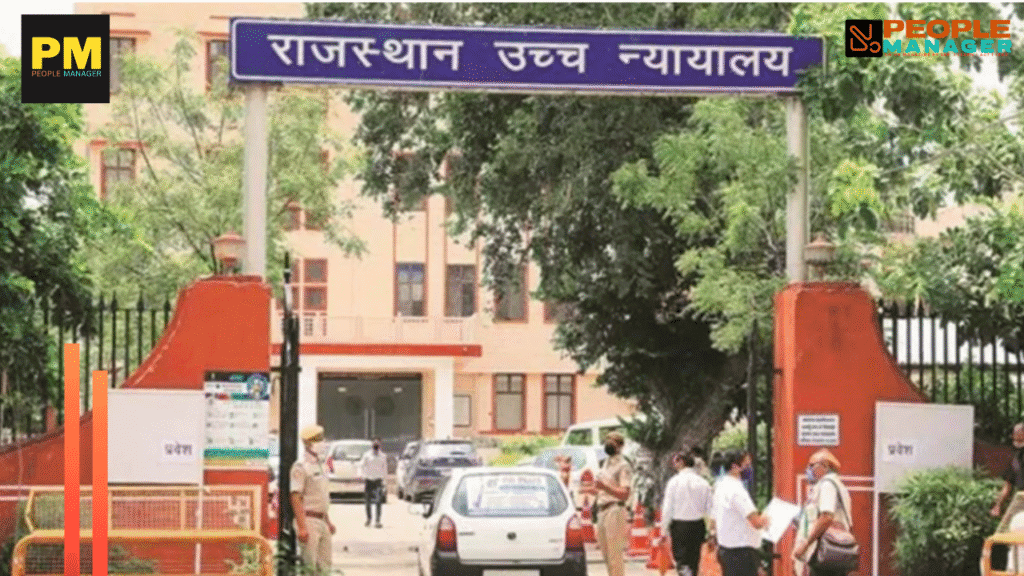
In a landmark ruling reaffirming the sanctity of due process in employment law, the Rajasthan High Court has held that termination of service on grounds of “questionable integrity” amounts to a stigmatic order and therefore mandates a formal enquiry. The judgment comes in response to a writ petition filed by a conductor of the Rajasthan State Road Transport Corporation (RSRTC), whose employment was terminated during his probation without disciplinary proceedings.
Justice Vinit Kumar Mathur, presiding over the Single Bench, quashed the termination order dated 13.05.2015, ruling that such punitive action—anchored in allegations of dishonest conduct—cannot stand without adherence to the principles of natural justice. The judgment significantly strengthens safeguards for probationary employees facing integrity-based allegations, and reinforces jurisprudence on stigmatic termination under Indian service law.
Case Background: Ticketless Travel Allegations Lead to Dismissal
The petitioner, appointed as a conductor with RSRTC on 03.03.2014, was serving a two-year probation period when allegations surfaced that he had permitted passengers to travel without valid tickets on four separate occasions. The corporation issued a notice to him on 01.05.2015 under the Rajasthan State Road Transport Workers & Workshop Employees Standing Orders, 1965 (“Standing Orders”). The petitioner responded with a detailed rebuttal dated 03.05.2015.
However, on 13.05.2015, RSRTC terminated the petitioner’s services by invoking Clause 8(iii) and 8(iv) of the Standing Orders—without referring the matter to an enquiry or considering the petitioner’s written reply. The decision was challenged by the petitioner through a civil writ petition.
Legal Framework: Probationary Status & Clause 8 of Standing Orders, 1965
The Standing Orders provide the regulatory framework governing employment conditions at RSRTC. Clause 8(iii) stipulates that a probationer may be confirmed only if the appointing authority finds their integrity and fitness satisfactory. Clause 8(iv) contemplates termination during probation if the employee fails to meet expectations or pass required tests—typically allowing for compensation in such cases.
However, the High Court clarified that mere non-confirmation does not authorize punitive termination in the absence of formal proceedings—particularly when allegations involve moral turpitude or dishonest conduct.
Court’s Analysis: Allegation of Integrity Breach Warrants Formal Enquiry
The Court examined the termination order and noted that the primary ground cited was “questionable integrity.” Justice Mathur held that:
“Since the petitioner was found involved in carrying passengers without tickets and the allegation was that his integrity is questionable, consequently, his services were terminated. Therefore, the same can easily be termed as an ‘order of termination’ having been passed with stigma.”
The Court opined that stigmatic termination—especially one that could adversely affect the employee’s future career prospects—triggers the requirement of a domestic enquiry. The employer cannot bypass established legal procedure by citing probationary status or relying solely on discretionary clauses in service rules.
Key Legal Finding: Stigmatic Nature of Termination
The ruling establishes that:
- Allegations impugning integrity are inherently stigmatic
- Termination based on such grounds is punitive in nature
- Holding of an enquiry is mandatory prior to such termination
- Denial of natural justice renders the order legally unsustainable
The decision aligns with precedents laid down in cases such as State Bank of India v. Jagjit Singh and Radhey Shyam Gupta v. U.P. State Agro Industries Corp., where courts have consistently stressed on the need for procedural fairness in dismissals carrying stigma.
Outcome: Termination Order Set Aside; Liberty to RSRTC to Act per Law
In light of its findings, the High Court quashed the impugned termination order. However, it granted RSRTC the liberty to initiate fresh proceedings, if warranted, in accordance with law and after affording the petitioner a fair opportunity to be heard.
This calibrated relief serves as a caution to public sector employers: while maintaining service discipline is vital, the pathway must respect due process and the dignity of the employee.
Counsel for the Parties
For the Petitioner: Advocate Deepak Nehra
- For the Respondent (RSRTC): Advocate Shashank Sharma
Broader Implications: Reinforcing Employee Rights in Public Sector
This judgment bears significant implications for HR compliance, especially within quasi-governmental and state-controlled undertakings. It signals:
- The limits of discretion during probation, particularly when moral allegations are made.
- The judicial insistence on procedural due diligence before invoking punitive employment consequences.
- A reinforced framework for employee safeguards, even at entry-level designations.
For HR leaders, especially in transport and infrastructure sectors, this underscores the imperative to review termination protocols, institute clear documentation standards, and ensure that integrity-based allegations are handled through formal, accountable channels.
Citation
Prakash Manda v. The Rajasthan State Road Transport Corporation RSRTC, decided on 14-07-2025. For further insights into the evolving workplace paradigm, visit