Building Workforce for the AI Era: How Organisations Can Prepare Talent for the Next Decade
The growing integration of AI across enterprise technology will also require greater understanding between different technology communities. AI teams will need familiarity with infrastructure. Cloud and networking teams will need to understand AI workloads. Cybersecurity teams will need to account for the risks associated with AI systems.
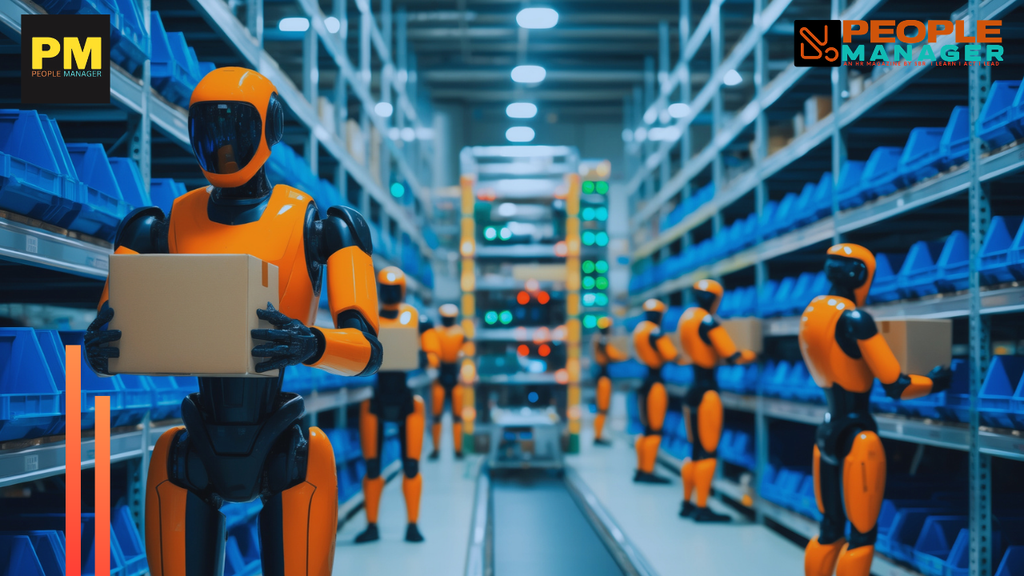
The workplace is entering a period of significant change. Artificial intelligence is becoming part of how businesses operate, make decisions and serve customers. As these systems become more capable and accessible, their influence will extend across functions and levels of an organisation.
For employees, this will mean changes in the way work is performed. Some tasks will become automated, some will be enhanced through AI, and new responsibilities will emerge around analysis, decision making and oversight. For organisations, this creates a workforce planning challenge that will become increasingly important over the next decade.
The question for business leaders is how to prepare their people for this transition. This involves understanding how roles will evolve, developing the right skills, creating the technology environment required for AI and establishing responsible ways of using these systems.
The shift is already underway. According to Deloitte’s State of AI in the Enterprise 2026, 40% of respondents in India reported extensive or complete use of AI, compared with 28% globally. Regulatory and compliance requirements and resistance to change remain among the major challenges to implementation.
These developments point to a broader workforce agenda. Organisations will need to think carefully about the roles they want employees to play as AI becomes embedded in everyday operations and the capabilities required to support that evolution.
Reconfiguring Roles Around Human-AI Collaboration
The first step is to understand how AI will affect individual roles. The impact will vary across functions. A finance professional may increasingly work with AI generated analysis and spend more time interpreting its business implications. A sales professional may use AI powered customer intelligence to identify opportunities and understand customer behaviour. An operations professional may use AI for forecasting, planning and process optimisation.
This makes role level workforce planning increasingly important. Leaders need to examine the tasks within each role and understand where AI can support employees, where human expertise remains important and which activities could become more valuable as AI takes on routine work.
The resulting skills mix will also change. Employees will need a combination of domain expertise, data literacy, technology familiarity and sound judgement. These capabilities will need to be developed within the context of each role and its business requirements.
A January 2026 NASSCOM report on human AI collaboration found that 20 to 40% of all work in Indian tech organisations was being carried out via AI, while 40% of respondents expressed concerns about employee readiness. The findings highlight the importance of preparing employees as AI becomes more deeply integrated into everyday work.
For organisations, this means workforce planning needs to account for changing tasks, evolving responsibilities and the skills required to work effectively with AI.
Make Infrastructure an Element of Workforce Readiness
An AI ready workforce also depends on the technology environment available to employees. AI workloads require compute, cloud, data, connectivity and cybersecurity capabilities. As organisations move towards wider deployment, technology teams will need a stronger understanding of how these layers interact and how they support business applications.
India’s AI infrastructure is expanding rapidly. As of August 2026, IndiaAI’s shared compute platform had exceeded 45,000 GPUs and 237 projects were using subsidised AI computing in IndiaAI.
This expansion will create demand for professionals who understand the infrastructure required to deploy and operate AI at scale. AI specialists will remain important, while expertise across cloud, networking, data centres, cybersecurity and data management will also become increasingly relevant to AI adoption.
For business leaders, this creates a broader view of workforce readiness. Employees can only make effective use of AI when the systems supporting them are reliable, secure and capable of handling the required workloads.
The growing integration of AI across enterprise technology will also require greater understanding between different technology communities. AI teams will need familiarity with infrastructure. Cloud and networking teams will need to understand AI workloads. Cybersecurity teams will need to account for the risks associated with AI systems.
Developing this shared understanding can help organisations build stronger technology capabilities and make AI adoption more sustainable.
Build Trust in AI Use Daily
As AI systems gain access to business and customer information, responsible use will become an everyday organisational responsibility. Employees need clear guidance on what information can be used with AI systems, how AI generated outputs should be assessed and where human review is required. These considerations become particularly important for organisations exploring sovereign AI, where control over data, infrastructure, models and operations can have strategic significance.
Governance therefore needs to become part of daily business practices. Employees should understand the principles that apply to their work and have access to the controls, training and support required to follow them.
Technology will play an important role here. Access controls, cybersecurity and monitoring can provide safeguards around how AI systems are used. Employees also need sufficient awareness to recognise situations that require additional review or escalation.
The infrastructure supporting AI will continue to evolve as well. Autonomous AI systems will place greater demands on enterprise networks, particularly around connectivity, security, resilience and infrastructure agility.
Responsible AI therefore needs to be considered across people, processes and technology. Building trust will depend on how effectively these elements work together in everyday operations.
Transform Reskilling into a Business System
Continuous learning will be another important part of workforce readiness. AI capabilities are evolving quickly, which means organisations need learning systems that can keep pace with changes in technology and business requirements. According to EY’s Work Reimagined Survey 2025, conducted in January 2026, 88% of employees in India use AI in their jobs. Further, 87% of employees and 90% of employers feel that learning new skills is essential. Yet employees spend less than 40 hours a year learning about AI technology.
The opportunity for organisations is to make learning more closely connected to everyday work.
Leaders can begin by identifying the roles most affected by AI and mapping the skills required as those roles evolve. These skills can then be incorporated into role specific learning programmes, with employees given opportunities to apply them to real business challenges.
This approach can also make learning more relevant to employees. A finance professional may need to learn how to evaluate AI generated analysis. A marketing professional may need to understand how AI can support research and content workflows. An operations professional may need to work with AI based forecasting tools.
The responsibility for this development needs to extend across the organisation. HR can provide the learning framework, while business leaders and functional teams can identify the capabilities their teams will require. Technology teams can contribute to understanding how AI tools and infrastructure are evolving. Learning can therefore become part of how organisations build capability and prepare for future roles.
Building the Workforce for the Next Decade
The AI workforce of the coming decade will develop through the way organisations reshape roles, build skills, strengthen infrastructure and establish responsible practices. This will require sustained attention from leadership. Roles will continue to evolve as AI capabilities develop. Employees will need opportunities to learn and apply new skills. Technology infrastructure will need to support growing AI workloads.
The organisations that bring these elements together will be better positioned to make AI part of everyday business. The future workforce will include people who understand their domain, know how to work with AI and can apply sound judgement to the decisions that matter. Their effectiveness will also depend on the infrastructure, security and organisational systems supporting them.
Building an AI workforce is therefore a long-term organisational effort. It begins with understanding how work is changing and continues through the development of people, technology and processes that can evolve with it.
For business leaders, the priority for the coming decade is clear. Prepare roles for AI, give employees the skills to work with it, build the infrastructure to support it and create the conditions for responsible use. This will help organisations turn AI adoption into lasting workforce capability. For further insights into the evolving workplace paradigm, visit

prolific leader who oversees Finance, HR, Business Operations, and Supply
Chain Management (SCM). She spearheads strategies to strengthen and manage
a 1700+ strong workforce.
Under her leadership, Ishan Technologies has significantly improved its credit
rating, reinforcing financial stability and trust in the industry. A strong advocate
promoting a collaborative and high-performance culture, Ms. Kotecha’s
leadership has been instrumental in Ishan Technologies earning the prestigious
Great Place to Work certification in 2024. Her contributions to the tech industry
have also been recognized through the SheXo in Tech award by Deloitte (2024).