
Accidents During Office Commute Covered Under Compensation Law: Supreme Court
The Supreme Court has held that employees injured or killed while commuting to or from work may be entitled to compensation under the Employees’ Compensation Act, 1923, provided there exists a clear nexus between the accident and the employment.
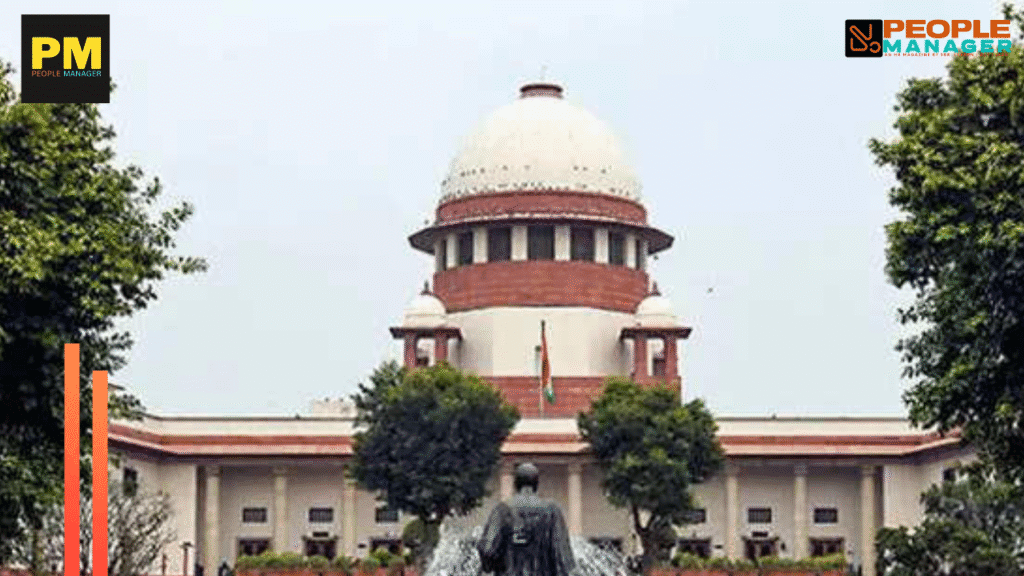
In a far-reaching decision that strengthens the rights of Indian workers, the Supreme Court ruled on July 29, 2025, that accidents occurring during an employee’s commute to or from the workplace may qualify for compensation under the Employees’ Compensation Act, 1923—so long as a direct nexus with employment can be established. The judgment marks a critical shift in how work-related risks are understood, especially for those navigating early shifts, long routes, or uncertain commutes.
The decision came in Davishala & Ors vs Oriental Insurance Company Ltd & Anr, where a bench of Justices Manoj Misra and K V Viswanathan examined whether the fatal accident of a factory watchman—who died en route to work—could be classified as arising “out of and in the course of his employment,” as required under Section 3 of the Employees’ Compensation Act (EC Act). In a detailed and empathetic ruling, the bench clarified that employment doesn’t begin only at the factory gate—but may extend to the journey itself when employment-related circumstances dictate that commute.
Case: Loss, Litigation, and Legal Complexity
The case centered around the tragic death of Shahu Sampatrao Jadhavar, a watchman at a sugar factory, whose duty hours ran from 3:00 a.m. to 11:00 a.m. On April 22, 2003, while en route to his early shift, Shahu was involved in a motorcycle accident roughly five kilometers from his workplace. He died from the injuries, leaving behind a widow, four children, and his mother.
The family filed a claim under the EC Act. Recognizing the financial and emotional impact of the incident, the Commissioner for Workmen’s Compensation and Civil Judge, Senior Division, Osmanabad, awarded them ₹3,26,140 in compensation, along with 12% annual interest from May 22, 2003. However, this relief was short-lived. On appeal, the Bombay High Court reversed the award, reasoning that since the accident happened during transit—and not on the job—it could not be covered by the EC Act.
This created a complex legal dilemma: when does employment really begin, and how far does an employer’s liability extend?
Section 3 of the EC Act and the Notional Extension Doctrine
The heart of the issue lay in interpreting Section 3 of the Employees’ Compensation Act, which addresses accidents “arising out of and in the course of employment.” Historically, courts have wrestled with the scope of this clause. The principle of notional extension has often been invoked—allowing the “place of employment” to be conceptually extended beyond its physical boundaries depending on context.
But without clear statutory guidance, cases have leaned heavily on facts and judicial discretion, leading to inconsistent outcomes. This prompted the Supreme Court to look beyond the EC Act and consider laws with parallel intent—particularly the Employees’ State Insurance Act, 1948 (ESI Act).
Section 51E of the ESI Act: Clarification and Continuity
Introduced in 2010, Section 51E of the ESI Act provides that accidents during commutes to or from work can be treated as arising during employment—if there is a direct connection to the time, place, and nature of work. The provision codifies an understanding of employment as more than location-bound.
The Supreme Court determined that Section 51E is clarificatory—intended to address past ambiguities and make explicit what was always implied. Therefore, it applies retrospectively. By reading the ESI Act and EC Act together, the bench harmonized their shared objective: protecting workers from the real-world risks of their employment.
Supreme Court’s Finding: Duty, Timing, and the Nexus Test
In its ruling, the Court laid out a thoughtful framework for future cases. Key takeaways include:
- Commutes may fall within employment scope if time, purpose, and circumstances suggest a direct connection.
- Probable work timing, especially for early or odd-hour shifts, is a vital indicator of nexus.
- Employee intention—such as traveling for the sole purpose of reporting to duty—strengthens the employment link.
- Employer benefit or control over the commuting pattern further supports compensability.
Justice Misra and Justice Viswanathan found that Shahu’s early-morning commute, consistent with scheduled duty hours, created a clear and sufficient nexus to his job. The accident was not incidental but integrally tied to his employment. As such, compensation under the EC Act was entirely justified.
Why This Ruling Matters: Implications Across Industries
This decision resonates far beyond the sugar factory in Osmanabad. It sets a precedent with sweeping implications:
Shift Workers and Industrial Employees
Millions of employees in factories, transport, healthcare, and manufacturing work odd hours. Their early or late commutes often involve higher risk. This judgment ensures their protection is not limited to punch-in times alone.
HR and Legal Policy
Employers now must acknowledge that workplace safety protocols extend to the commute, especially where timing, location, and employee intent meet the threshold of employment nexus. Legal and HR teams may need to revisit policies around commuting risks, coverage, and compensation.
Judicial Consistency and Employee Rights
By aligning the EC Act with the ESI Act, the Supreme Court promotes clarity and consistency in judicial approach—encouraging welfare-centric interpretations that prioritize the rights of workers.
Bridging Gaps Through Legislative Intent
The judgment also contains a valuable lesson in statutory interpretation. The Court observed that laws addressing similar subject matter and serving common objectives should be read together, especially in matters involving worker protection.
“The EC Act is a beneficial legislation intended to protect employees and their families from the consequences of work-related injuries and deaths,” noted the bench.
Therefore, the use of clarificatory legislation (Section 51E) to retroactively reinforce existing worker protections reflects judicial endorsement of legislative intent as a guiding principle—rather than rigid legal literalism.
The Final Verdict and Restored Relief
Concluding that the High Court’s narrow interpretation had unjustly deprived the family of rightful compensation, the Supreme Court:
- Set aside the Bombay High Court’s judgment
- Restored the original compensation award
- Reaffirmed the validity of the employee’s claim under the EC Act
This outcome brings closure and justice to the family of Shahu Sampatrao Jadhavar—while also correcting a legal misinterpretation that could have denied similar protections to thousands of workers across India.
Case Summary
| Case Title | Davishala & Ors vs Oriental Insurance Company Ltd & Anr |
|---|---|
| Judgment Date | July 29, 2025 |
| Bench | Justice Manoj Misra and Justice K V Viswanathan |
| Court’s Decision | Reinstated compensation; commute covered under EC Act |
| Key Statutes Referenced | Employees’ Compensation Act, 1923 & ESI Act, 1948 |
| Legal Principle Applied | Notional extension of employment; nexus test |
Closing Thoughts: Toward a Safer, Fairer Commute
In a country where vast segments of the workforce navigate challenging commutes daily—often without the security of transportation, flexible hours, or insurance—the Supreme Court’s ruling is more than a legal clarification. It is a statement of empathy, reinforcing the idea that laws must reflect the realities of working lives.
Accidents don’t wait until someone clocks in. Now, the law won’t either. For further insights into the evolving workplace paradigm, visit

- Raymond Appoints Sarita Tripathi as CHRO for Aerospace and Precision Engineering - March 26, 2026
- Goodyear India Announces Strategic HR Leadership Transition - March 24, 2026
- Supreme Court Urges Law on Paternity Leave in India - March 19, 2026