
Violation of Retrenchment Rules Doesn’t Always Mean Reinstatement: Rajasthan High Court
The High Court leaned on several earlier Supreme Court judgments which have consistently held that compensation in lieu of reinstatement is often the more balanced remedy.
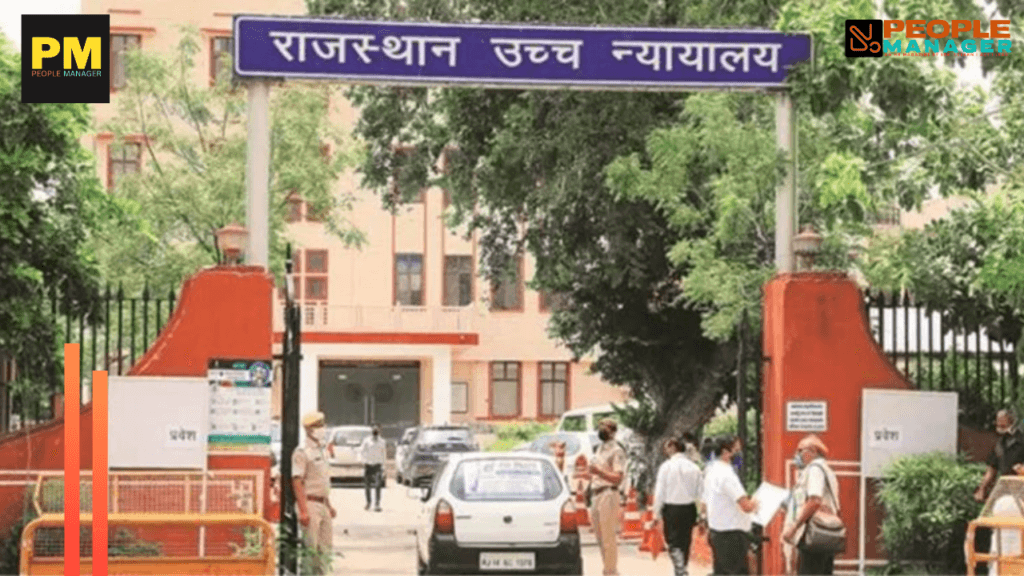
The Rajasthan High Court has delivered an important ruling in the case of Satya Narain v. The Judge, Central Industrial Tribunal & Anr. (S.B. Civil Writ Petition No. 14013/2011, decided on 6 January 2026). The Court clarified that when an employer terminates a worker without following the retrenchment provisions under Section 25F of the Industrial Disputes Act, 1947, the termination is indeed illegal — but this does not automatically mean the worker must be reinstated with back wages.
Instead, the Court emphasised that the kind of relief to be granted depends on the facts and circumstances of each case.
Section 25F of the Industrial Disputes Act lays down safeguards before an employee can be retrenched. These include:
- Giving proper notice of termination.
- Paying retrenchment compensation.
- Following due procedure to ensure fairness.
If these steps are skipped, the termination is unlawful. However, the High Court explained that reinstatement — putting the employee back into their old job — is not a mechanical or inevitable outcome.
The case came up because a Labour Court had ordered reinstatement of a worker solely because Section 25F had been violated. The employer challenged this order.
The High Court observed:
- Reinstatement is not automatic: Just because the law was violated does not mean the worker must always be taken back.
- Compensation may be fairer: In situations where the worker had served only for a short period, where there has been a long delay in litigation, or where the employer-employee relationship has soured, monetary compensation may be more practical than reinstatement.
- Labour law aims at fairness, not punishment: The Court remarked that the purpose of labour law is to ensure just outcomes, not to mechanically punish employers for procedural lapses.
The High Court leaned on several earlier Supreme Court judgments which have consistently held that compensation in lieu of reinstatement is often the more balanced remedy. This is especially true when:
- The job was not permanent.
- A significant time has passed since termination.
- Reinstatement would disrupt industrial harmony.
The High Court modified the Labour Court’s order. Instead of reinstating the worker, it directed the employer to pay a lump-sum compensation of ₹1.5 lakh.
This ruling is significant because it reflects the modern judicial approach in labour disputes:
- Courts are moving away from rigid, technical interpretations.
- Relief will be tailored to the realities of each case.
- The focus is on equity, practicality, and industrial peace rather than automatic reinstatement.
In short, the judgment signals that while workers’ rights remain protected, remedies will be pragmatic and fair, balancing the interests of both employees and employers. For further insights into the evolving workplace paradigm, visit