
Shilpa Kalathur on Plugging the ‘Leaky Pipeline’ via Flexible Tech Ecosystems
For frontline leaders, their role needs to be more supportive and anticipatory – such as having ‘stay conversations’ with employees, especially those who might be exhibiting signs of discontent and dissatisfaction, before the resignation letter. These conversations work best when they happen regularly and informally, not once a year at appraisal time. A frontline leader who simply asks, ‘What would make you stay?’ and then acts on the answer often does more for retention than any policy document- Tech.
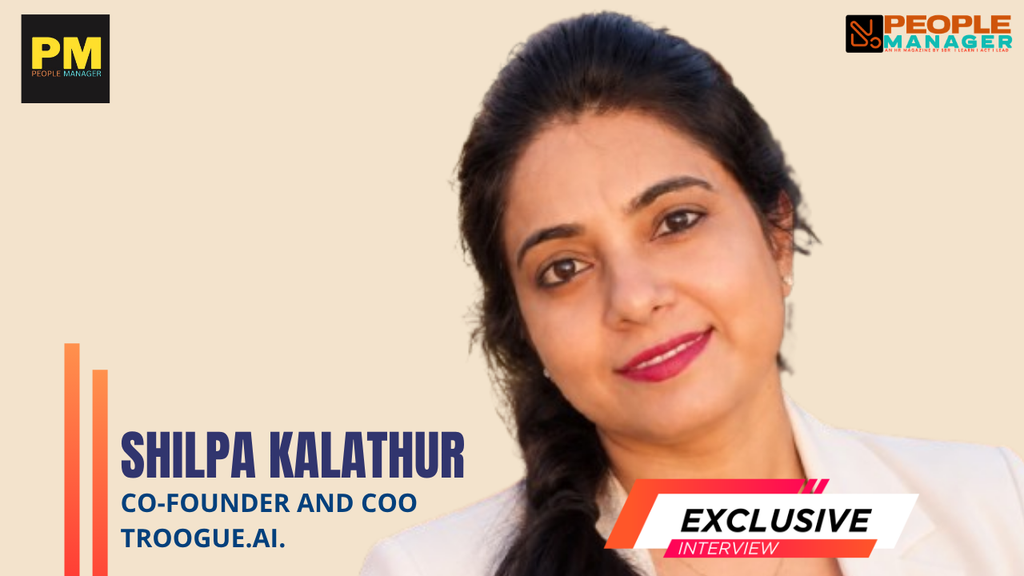
As organizations navigate rising talent attrition, evolving workforce expectations, and rapid technological transformation, traditional employment models are being challenged to retain skilled professionals. The focus is shifting from conventional full-time employment structures towards flexible, technology-enabled talent ecosystems that allow organizations to retain capabilities even when employees need alternative ways of working.
At the heart of this transformation is the recognition that talent often leaves not because of a lack of ability or ambition, but because of life circumstances such as caregiving, relocation, burnout, or changing career priorities. Flexible work arrangements, project-based opportunities, internal talent marketplaces, and capability-based assessments can help organizations retain access to valuable skills while enabling professionals to sustain their careers.
Technology, particularly artificial intelligence, can play a significant role in identifying skills, matching talent with opportunities, automating administrative processes, and improving workforce deployment. However, successful implementation requires human oversight, transparent assessments, appropriate governance, and a workplace culture that prioritizes outcomes over physical presence or headcount.
Equally important is leadership accountability. Managers must be equipped to lead blended teams, recognize early signs of disengagement, and create opportunities for internal mobility and flexible participation. Organizations must also measure success through indicators such as regretted attrition, returner retention, redeployment rates, and time-to-fill for critical skills.
In this conversation with People Manager, Shilpa Kalathur, Co-Founder & COO- Troogue.AI explores how flexible technology ecosystems can help organizations address the talent “leaky pipeline.” The discussion highlights the importance of combining AI-enabled talent matching, inclusive workforce practices, and human-centric leadership to build resilient talent strategies where skilled professionals can continue contributing through different stages of their careers.
Q. : Many organisations struggle with the “leaky pipeline” of talent attrition. How do you see flexible tech ecosystems directly addressing this issue at scale?
Answer: When we refer to a leaky pipeline, we are not merely talking about people leaving a company but rather about the loss of skilled people who are leaving the workforce because the only choices are to get into another full-time role or to resign. And more often than not, the triggers are often life events such as caregiving, relocation or simply burnout, rather than a lack of ability.
The solution is to adopt flexible models which keep the skill within reach, even when the person leaves payroll. Flexibility however, needs proper guardrails, such as contracts, payments and on-boarding and should not be dependent on being doled out as a favour from one kind manager. Once flexibility is built into the system, it stops being an exception and simply becomes the way we work. Think of someone who steps back for a year to look after a parent. They can still pick up a short project, stay connected to the work and come back when they’re ready. The company keeps knowledge it took years to build and the person keeps their confidence.
Q. : Global Benchmarking: From your perspective, what lessons can Indian enterprises learn from global companies that have successfully reduced attrition through adaptive technology platforms?
Answer: If we look at global leaders as a benchmark – companies such as Unilever or Schneider Electric – they have internal talent marketplaces which enable people to grow without resigning. These companies treat skills data as a business asset, unlike most Indian firms which still rely on outdated CVs in the HRMS. Having tools such as adaptive technology platforms will only help if managers are willing to use them, which requires a change in mindset and the work culture. Even the best tools fail if managers are still rewarded for focusing on maintaining the headcount rather than maintaining the skills bench strength. And this is where India has an edge over other countries, as it has a large talent pool waiting to be tapped in its Tier-2/3 cities, as well as a large pool of career-break professionals. The real opportunity is in matching this talent with the right systems. When Indian companies actually map the skills they already have, they’re often surprised to find that the person they were about to hire from outside is already sitting in another team. Moving people internally should be the first option, not the last resort.
Q. : Workforce Diversity: How can flexible tech ecosystems be leveraged to support women, mid-career professionals, and frontline workers who often face higher dropout rates?
Answer: Women have to take extended time off from work due to marital and maternal commitments. When they return to the workforce, they are at an inherent disadvantage as most screening processes at companies filter out CVs that show a gap between jobs. To counter this, what’s needed is a capability-based assessment that lets women prove that they are still current and relevant. Additionally, offering women who have taken time off from work flexible working hours could allow them to return to work sooner. Here, I must clarify that flexible hours does not mean ‘anytime’ or ‘always available’ hours for late client calls. It means predictable hours that offer flexibility of working remotely.
For mid-career professionals, their main concern is becoming obsolete with AI taking over their jobs. Selecting them for short projects allows them to reskill on real work. A three-month stint in a new area gives them hands-on time with new tools, new colleagues and real proof of what they’ve learnt. That counts for a lot more than a certificate from an online course done on the side.
When it comes to frontline workers among whom the attrition rate is higher, giving them mobile-first tools and the control over shifts should go a long way in reducing their dropout. Small things make a big difference here: being able to swap a shift from your phone, getting paid on time and being able to see where the next role could come from.
Q. : Troogue.ai operates in a space where AI is central. How do you ensure that automation enhances employee experience rather than alienating human talent?
Answer: We should use AI tools to enable automation of processes; admin functions like timesheets, invoices and compliance and not automation of the relationship. That means that AI tools should act as assessors and not as arbitrators.
Troogue prides itself on being a human-centric AI platform, that acts as a facilitator. For instance, our AI-powered screening process for hiring can test candidates and score them on their performance but they also require feedback which necessitates the involvement of a person. The final decision always rests with humans, who make the call on borderline cases. We’re also open with candidates about how they’re being assessed, so it never feels like a black box. When people understand how the technology works and know that a person will look at their case, they tend to trust the result even when it doesn’t go their way. That trust is what keeps good people engaged.
Q. : Scalability across Industries: Do you believe flexible tech ecosystems can be standardised across sectors like BFSI, healthcare, and manufacturing, or must they remain industry-specific?
Answer: Yes, flexible tech ecosystems can be adopted and adapted across sectors and industries if we use standard rails with industry specific customisation. A classic example of this is UPI.
There can be commonality across processes such as contracts, payments, verification, skills taxonomy and compliance. However, while the rails can be common, execution layers need to be sector or process specific.
If we talk about the BFSI sector, this means stringent data security and adherence to RBI norms. Another specificity in the BFSI segment would be alignment between security onboarding, which generally takes longer and talent matching. If the two processes are run simultaneously, the time-to-deployment can be reduced without any compromise.
Similarly, in healthcare, it could mean credential verification and shift-based workforce management. While in the manufacturing sector, it would need on-site capabilities and specialist IT/OT skills. The shared rails give you speed and consistency while the sector layer makes sure the solution actually works on the ground. Forcing one rigid model on every industry is usually where these programmes go wrong.
Q. : What role should mid-level and frontline leaders play in embedding these ecosystems to prevent attrition and sustain engagement?
Answer: Empowering mid-level managers to decide on whether flexibility happens or not is the first step towards minimising attrition. In addition, changing the practice of incentivising them solely on the basis of their team size to rewarding them on the basis of outcomes and retention would also significantly diminish attrition as they will then focus on skill retention. For this, they will need to be trained to manage outcomes and not merely look at presence of people numbers. Mid-level managers will also need to be trained to run blended teams without a ‘two-class’ culture.
For frontline leaders, their role needs to be more supportive and anticipatory – such as having ‘stay conversations’ with employees, especially those who might be exhibiting signs of discontent and dissatisfaction, before the resignation letter. These conversations work best when they happen regularly and informally, not once a year at appraisal time. A frontline leader who simply asks, ‘What would make you stay?’ and then acts on the answer often does more for retention than any policy document.
Q. : What metrics or KPIs should organisations track to validate that their flexible tech ecosystem is truly plugging the pipeline leak?
A: Organisations need to focus on regretted attrition, which is the attrition of employees on a voluntary basis as against attrition due to other reasons such as retirement or contract termination. Pipeline leakage usually happens in stages and organisations would do well to keep focus on that – such as the first 90 days after joining, post-parental leave and mid-career.
Organisations also need to analyse returner retention rates among employees who have moved to flexible work hours at the 6 and 12 month mark. Also, by observing redeployment and boomerang hiring rates, along with time-to-fill for niche skills, enterprises can see the efficacy of their talent retention ecosystem. Lastly, some attrition could be due to personality clashes at work with managers, which is why the right intervention at the right time can help reduce the attrition. Exit interviews and quick pulse surveys can also pick up patterns the numbers might miss. The important thing is to look at these metrics often and act fast. By the time attrition shows up in the annual report, the talent has already walked out of the door.
Q. : Employee Experience Design: How do you integrate personalisation into tech ecosystems so employees feel supported rather than monitored?
Answer: Support vs surveillance comes down to who the data serves and whether the employee can see it. Just to give an example – monitoring how much time an employee spends in front of the screen, or the keystrokes would tantamount to surveillance whereas assessing the employee solely on the basis of what they deliver and whether they are able to deliver along with feedback on their work would make them feel supported.
This culture also needs to extend to clients when they demand contractor monitoring – instead, offer them milestone based tracking for each aspect of the assignment. To me, good personalisation means giving employees control over their own data and using it to suggest the right learning, project or support when they need it. When people can see what’s being tracked and why, the data starts working for them instead of being used to watch them.
Q. : Future of Work: With hybrid and gig models becoming mainstream, how can flexible tech ecosystems evolve to retain non-traditional talent pools?
Answer: Skilled gig work needn’t necessarily imply job-insecurity. It’s understandable that for independent professionals, their biggest worry is the ‘drought’ period of the empty months between assignments or a gig. Towards this end, giving professionals greater pipeline visibility can help them plan their bandwidth to take on different assignments and also help manage their finances. Structural protections, such as clear-cut contracts with guaranteed payments along with social security which is proposed under the new labour law, can largely mitigate this feeling of insecurity.
In addition, having an ecosystem in place that enables the portability of verified skills records, will help professionals build their recall value and improve their chances of landing more gig assignments. Over time, a solid track record on a trusted platform becomes a professional’s calling card. It also gives companies the confidence to bring back people they’ve worked with before, so long-term relationships can grow even without a full-time contract.
Q. : Finally, what is Troogue.ai’s long-term vision in shaping enterprise ecosystems that not only plug attrition gaps but also create sustainable growth cultures?
Answer: At Troogue, we believe that people should advance on what they can actually do and not on the basis of what they list on their CVs or connections. Our mission is to make capability visible, keep strengthening it and make it accessible to enterprises. Professionals who register with us are offered sustainable careers with a stable income and growth. They compete on capability and not price.
What we are working towards is an AI-native workforce that gets better with AI rather than being replaced by it. And the proof of that are the 25,000+ professionals and the 50+ enterprise clients who are partnering with us.
Going forward, we want to help enterprises build cultures where growth never stops and where good people aren’t lost just because they need a different way of working. If we can make flexible work as dependable as a full-time job, we believe we can finally plug the leaky pipeline. For further insights into the evolving workplace paradigm, visit

- Shilpa Kalathur on Plugging the ‘Leaky Pipeline’ via Flexible Tech Ecosystems - October 10, 2026
- Ashish Gupta on Employee Benefits : Are they Ready for the “Sandwich Generation”? - October 10, 2026
- Zypp Electric Expands Employee Ownership with ₹11 Crore ESOP Allocation - October 2, 2026