Hybrid Work Without Micromanagement: How Managers Can Build Trust, Accountability, and Performance
A strong learning rhythm does not require a complicated programme. Start with outcomes. Make sure people understand what they are accountable for and how good performance will be judged. Translate those outcomes into capabilities. Identify the skills and judgement the organisation will need next, not only the skills required today– Hybrid Work
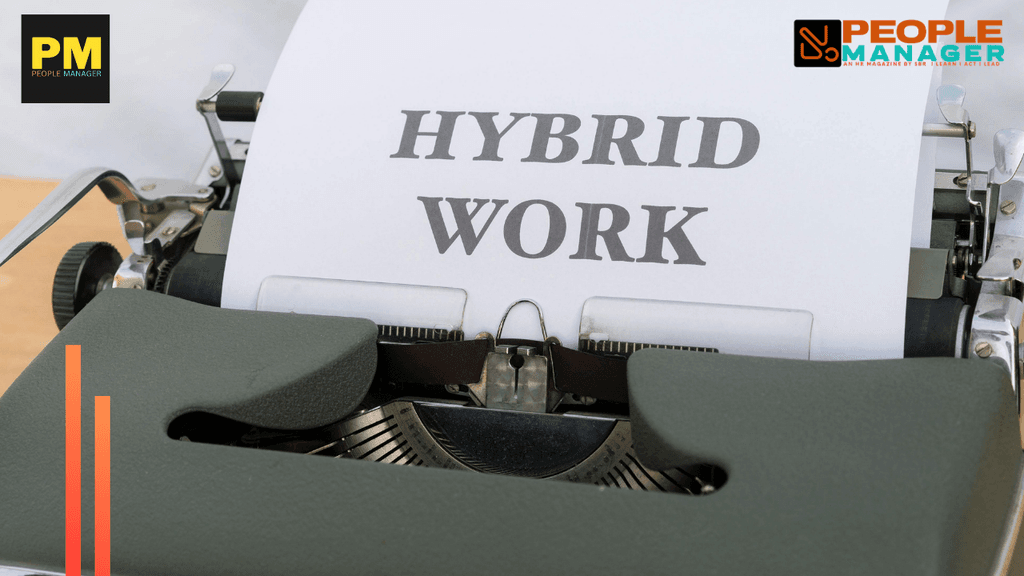
Hybrid work has changed where people work, but, more importantly, how leaders understand performance, learning, and trust. In many organisations, I see an uncomfortable contradiction. We ask people to experiment with artificial intelligence, challenge ways of working, share unfinished ideas and learn quickly. We sometimes respond to distance with more reporting, more activity tracking and a stronger need to know who is online, who is visible and who appears busy.
The visibility paradox
That approach may create reassurance, but it does not create readiness. People learn best when they can admit uncertainty, ask for help, test new approaches and reflect on what did not work. If every action feels observed, people become more careful about what they reveal. They protect their image rather than exposing the questions that begin meaningful learning.
This is why I believe hybrid performance needs a learning rhythm, not a surveillance rhythm. A learning rhythm is not another calendar of courses. It is a way of organising work so that clarity, coaching, practice, reflection and feedback happen consistently enough to build capability while the work itself is changing.
What a learning rhythm really means
The starting point is clarity. When people are unsure what good performance looks like, managers often fall back on what they can see. Attendance, responsiveness, meeting activity, and visible effort become proxies for contribution.
That is understandable, but it is also dangerous. Activity is not the same as value, and visibility is not the same as readiness. Teams need a view of the outcomes they are responsible for, the standards that define good work, and the capabilities those outcomes increasingly require. Once those expectations are explicit, the conversation changes. Managers can discuss contribution rather than presence, and employees can see where they need to grow.
In hybrid environments, clear outcomes are what make autonomy sustainable. They give employees the freedom to decide how best to deliver, while giving managers a fair and consistent basis for assessing contribution without defaulting to visibility, proximity or time spent online. The next question is not, “Which course should this person complete?” It is, “What does this person need to understand, do or judge differently to succeed in the work ahead?”
That distinction matters because capability is built in context. Formal learning still matters, but judgement develops through experience. Stretch assignments, mentoring, peer review, communities of practice, customer conversations and collaborative problem-solving help people turn knowledge into usable capability.
A learning rhythm connects these experiences instead of leaving development to chance.
Why hybrid work makes this urgent
Hybrid work did not create unequal access to learning. It made the gaps easier to see. In a shared office, people learn through moments that are rarely listed in a development plan. They hear how an experienced colleague frames a problem. They ask a question after a meeting. They are invited into a discussion because they happen to be nearby. They observe how a difficult customer situation is handled.
In distributed teams, those moments do not disappear completely, but they become less evenly distributed. That matters because learning opportunities often become career opportunities. The employee who receives more coaching becomes more confident. The person invited into a difficult assignment gains experience that later signals readiness. The colleague who is remembered when a new role opens has often benefited from repeated visibility.
If organisations do not deliberately redesign how opportunity flows, hybrid work can quietly reward proximity. For leaders, fairness therefore cannot mean offering everyone access to the same learning portal. It means examining who receives feedback, exposure, mentoring, stretch work and sponsorship, and whether those opportunities are available across locations. Fair visibility in hybrid teams has to be designed, not assumed. Leaders need consistent ways to surface contribution, ideas and potential so that recognition and opportunity are shaped by impact, not by proximity or time spent in the room.
Managers are the bridge between work and learning.
The quality of a learning culture often comes down to what happens between an employee and a manager after real work has been done. Managers do not need to become full-time trainers. Their most important role is to help people make sense of experience.
A useful coaching conversation can be simple. What were you trying to achieve? What was harder than expected? What would you do differently next time? Where do you need support? What should we preserve because it worked? Consistent check ins create a useful rhythm for hybrid teams when they are focused on progress rather than presence. Their purpose should be to clarify expectations, remove barriers, surface support needs, and give people timely feedback before small issues become larger ones. These questions turn experience into learning. They also change the tone of management. Instead of checking whether someone is active, the manager becomes responsible for helping the person become more capable.
That shift requires managers to notice more than output. They need to see confidence, judgement, collaboration and readiness for greater responsibility.
It also requires humility. In fast-changing areas, expertise does not always flow from senior to junior. A younger employee may understand a new AI tool better than their manager. An experienced colleague may contribute context, pattern recognition and judgement that no tool can provide. Healthy learning cultures make room for both.
AI makes judgement the new core skill.
Artificial intelligence is often introduced as a training challenge. Give people access to tools, provide guidance, and encourage adoption. That is necessary, but it is not enough.
AI changes the work itself. It changes which tasks people perform, which tasks they delegate, how quickly work is produced, what must be checked, and where accountability sits when machine-generated output influences a decision.
This means the central capability is not simply tool proficiency. It is judgement. As AI takes on more routine work and reshapes how decisions are made, the capabilities that grow in value are increasingly human ones: sound judgement, adaptability, collaboration and the ability to apply context where technology alone cannot.
Employees need to know when AI is useful, when its output requires verification, when sensitive information should not be shared, when a recommendation should be challenged and when a human decision cannot be delegated.
This is where learning, ethics and governance meet. Policies are important, but responsible behaviour is built through practice. People need opportunities to discuss ambiguous cases, compare decisions, understand mistakes and learn where boundaries sit. The more sophisticated our technology becomes, the more important it is that people feel safe saying, “I am not sure.” A culture that punishes uncertainty will hide risk. A culture that makes thoughtful questioning normal will surface risk earlier.
Measure readiness, not activity
Learning functions have traditionally measured what is easy to count: attendance, completion, learning hours and course satisfaction. Hybrid work introduced other tempting measures, including online presence, response times and meeting activity. Most of these measures tell us what happened. They do not tell us what someone is ready to do next. That should be the more important question.
Useful measures should help leaders understand whether skills are improving, whether people are applying what they learned, whether teams can take on more complex work, whether internal mobility can solve capability gaps, and whether learning is improving business outcomes. Measurement has value when it changes a decision.
Should we invest more in a capability? Is someone ready for a larger role? Do we have enough internal strength to support a new business priority? Is the gap best solved through development, mobility, or hiring? If a metric cannot help answer a question like these, leaders should ask whether it deserves the attention it receives.
How to create a learning rhythm
A strong learning rhythm does not require a complicated programme. Start with outcomes. Make sure people understand what they are accountable for and how good performance will be judged. Translate those outcomes into capabilities. Identify the skills and judgement the organisation will need next, not only the skills required today.
Create frequent coaching moments tied to real work. Short conversations after a difficult task can be more valuable than an annual development discussion. Build practice into work. Use projects, mentoring, peer review, shadowing and stretch assignments to help people develop in context. Make opportunities visible. Do not rely on informal networks to decide who gets exposure, sponsorship or development.
Use technology at the moment of need. AI tools, knowledge platforms and digital learning can accelerate access to information, but they should strengthen human judgement rather than replace it. Review readiness regularly. Roles and technologies are changing too quickly for organisations to wait for annual talent cycles before asking what people can do next.
The leadership responsibility
The purpose of a learning rhythm is not to make employees spend more time learning. It is to make learning part of how the organisation adapts. This is ultimately a leadership responsibility because every transformation is experienced personally. Behind a new operating model is an employee wondering whether their skills will remain relevant. Behind an AI rollout is a manager trying to understand which decisions still belong to people. Behind a capability plan is someone hoping they will have a fair opportunity to grow.
Leaders cannot remove uncertainty from modern work. We can decide whether uncertainty becomes a source of fear or a reason to learn. The organisations that adapt fastest will not be those that know the most about what employees are doing every hour. They will be those that understand where capability is growing, where confidence is missing and what their people will be ready to take on next. That is the real value of a learning rhythm.
It replaces surveillance with clarity, episodic training with continuous development and activity measures with evidence of readiness. Most importantly, it gives people something increasingly valuable in a changing world of work: confidence that when the work changes, they will have the opportunity, support and trust to change with it. For further insights into the evolving workplace paradigm, visit