Supreme Court Revisits Definition of “Industry”: What HR Leaders Must Know
The Supreme Court reconsideration the 1978 Bangalore Water Supply verdict is a defining moment in Indian labour jurisprudence. While the Industrial Disputes Act, 1947, has been repealed, the Court’s ruling will shape the resolution of legacy cases and influence interpretations under the new Industrial Relations Code.
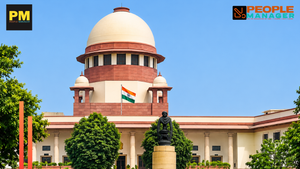
New Delhi, March 19 – A nine-judge Constitution Bench of the Supreme Court has reignited one of the most consequential debates in Indian labour law: the definition of “industry.” The Court clarified that its forthcoming verdict on the correctness of the 1978 Bangalore Water Supply and Sewerage Board judgment will apply to existing cases under the now-repealed Industrial Disputes Act, 1947.
This development is not just a matter of legal semantics. It has the potential to reshape how disputes are adjudicated in sectors ranging from healthcare and education to government welfare departments. For HR leaders and compliance professionals, understanding the contours of this debate is critical to navigating both legacy cases and the evolving framework under the Industrial Relations Code, 2020.
The 1978 Verdict: Expanding the Meaning of “Industry”
In 1978, a seven-judge bench led by Justice V.R. Krishna Iyer delivered a landmark ruling that expanded the definition of “industry” under Section 2(j) of the Industrial Disputes Act, 1947.
The Court introduced the “Triple Test”:
- Systematic activity undertaken by an organization.
- Cooperation between employer and employees in carrying out that activity.
- Production or distribution of goods and services to satisfy human wants.
If these conditions were met, the entity could be classified as an “industry,” thereby bringing its employees under the protective umbrella of the ID Act.
This expansive interpretation meant that hospitals, educational institutions, clubs, and even charitable organizations were suddenly covered by labour protections. Millions of employees gained access to statutory safeguards against unfair termination, victimization, and other workplace injustices.
Why the Definition Still Matters
Although the Industrial Disputes Act, 1947, was repealed and replaced by the Industrial Relations Code, 2020 (operative from November 2025), the Supreme Court’s current deliberations remain significant.
- Legacy Cases: Numerous disputes filed under the old Act are still pending. The Court’s verdict will directly impact their resolution.
- Precedent Value: Even though the new Code defines “industry” afresh, the principles laid down by the Court will influence how future disputes are interpreted.
- Policy Guidance: Employers and HR leaders often rely on judicial interpretations to shape workplace policies. A narrower or broader definition could alter compliance strategies.
Justice B.V. Nagarathna emphasize this point during the hearing: “Whatever is going to be said now will apply to the existing cases under the old law. That is the long and short of it.”
The Current Hearing
The nine-judge bench, led by Chief Justice Surya Kant, is examining whether the 1978 interpretation was correct. The bench has framed two broad issues:
- Whether the “Triple Test” laid down in the Bangalore Water Supply case correctly defines “industry.”
- Whether subsequent legislative developments—the Industrial Disputes (Amendment) Act, 1982 (never brought into force) and the Industrial Relations Code, 2020—affect the interpretation of “industry” under the repealed Act.
Senior advocate Indira Jaising argued passionately in defense of the 1978 verdict, noting that opposition from several states appeared to be “surrogate litigation” on behalf of private players. She reminded the Court that the ID Act was a beneficial legislation designed to provide access to justice for workmen facing victimization or wrongful termination.
The Chief Justice concurred, observing: “The Industrial Disputes Act, 1947, is a beneficial legislation and workmen are entitled to some kind of statutory protection.”
Implications for HR and Employers
For HR leaders, the debate over the definition of “industry” is not an abstract legal exercise. It has direct consequences for compliance, employee relations, and organizational strategy.
- Legacy Disputes : Organizations with pending disputes under the ID Act must prepare for the possibility that the expansive 1978 definition will continue to apply. This could mean broader obligations toward employees in sectors traditionally considered outside the industrial fold.
- Policy Continuity : Even under the Industrial Relations Code, 2020, courts may draw upon the reasoning of the 1978 verdict. Employers should anticipate that hospitals, schools, and welfare departments may continue to be treated as industries for dispute resolution purposes.
- Employee Relations : The ruling reinforces the principle that employees in non-traditional sectors deserve statutory protection. HR leaders should proactively extend fair grievance mechanisms and dispute resolution processes, even if not explicitly mandated.
- Compliance Audits : Organizations should conduct compliance audits to ensure that policies align with both the repealed Act (for legacy cases) and the new Code. This dual compliance approach will minimize litigation risks.
Strategic Guidance for HR Leaders
To navigate this evolving landscape, HR professionals should adopt a strategic approach:
- Map Pending Cases: Identify disputes filed under the ID Act that may be affected by the Supreme Court’s verdict.
- Review Definitions: Compare how “industry” is defined under the 1947 Act, the 1978 judgment, and the 2020 Code.
- Engage Legal Counsel: Seek expert advice on how the verdict may impact ongoing litigation.
- Strengthen Internal Processes: Establish robust grievance redressal mechanisms to preempt disputes.
- Communicate Transparently: Keep employees informed about their rights and the organization’s compliance stance.
The Larger Debate: Welfare vs. Efficiency
At the heart of the dispute lies a philosophical question: Should social welfare activities and government schemes be treated as industrial activities?
- Proponents of a broad definition argue that employees in hospitals, schools, and welfare departments perform systematic activities and deserve protection.
- Opponents contend that extending industrial protections to such sectors imposes undue burdens and distorts the purpose of labour law.
The Supreme Court’s verdict will determine which of these perspectives prevails, at least for legacy cases.
Comparative Global Perspective
India is not alone in grappling with the definition of “industry.”
- United Kingdom: Labour protections extend to a wide range of employees, including those in education and healthcare.
- United States: The National Labor Relations Act covers most private-sector employees but excludes certain public-sector workers.
- European Union: Member states generally adopt broad definitions, ensuring that employees in welfare and educational sectors enjoy statutory protections.
India’s 1978 verdict aligned with global trends toward inclusivity. The current deliberations will reveal whether the Court intends to maintain that trajectory.
Conclusion: A Defining Moment for Labour Jurisprudence
The Supreme Court’s reconsideration of the 1978 Bangalore Water Supply verdict is a defining moment in Indian labour jurisprudence. While the Industrial Disputes Act, 1947, has been repealed, the Court’s ruling will shape the resolution of legacy cases and influence interpretations under the new Industrial Relations Code.
For HR leaders, the message is clear: statutory protections for employees are expanding, not contracting. Whether in hospitals, schools, or welfare departments, employees are increasingly recognized as part of the industrial workforce deserving of justice and security.
This is a moment for organizations to go beyond compliance. By embracing the spirit of inclusivity and fairness, employers can strengthen trust, reduce disputes, and position themselves as progressive leaders in the evolving world of work. For further insights into the evolving workplace paradigm, visit

- Shilpa Kalathur on Plugging the ‘Leaky Pipeline’ via Flexible Tech Ecosystems - October 10, 2026
- Ashish Gupta on Employee Benefits : Are they Ready for the “Sandwich Generation”? - October 10, 2026
- Zypp Electric Expands Employee Ownership with ₹11 Crore ESOP Allocation - October 2, 2026