Delay in Charge Sheet Cannot Automatically End Suspension in Sexual Harassment Cases : Rajasthan High Court
According to the High Court, the Supreme Court’s ruling requires administrative authorities to review the suspension and record reasons if they wish to continue it beyond the initial period. The requirement is one of review and justification, not automatic cancellation. Therefore, the absence of a charge sheet within three months cannot by itself be used to invalidate a suspension order.
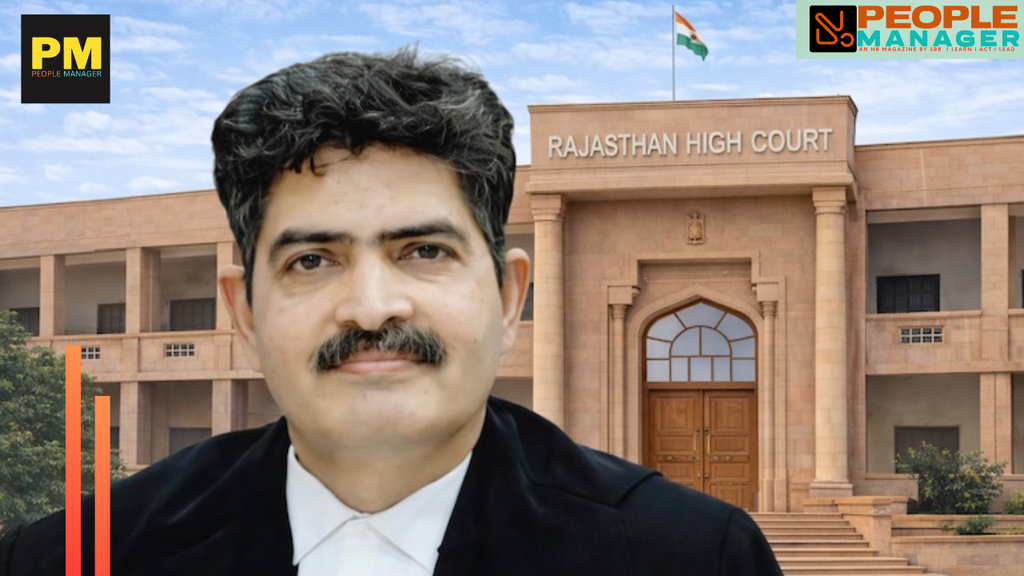
In a significant ruling with implications for workplace sexual harassment matters and disciplinary proceedings, the Rajasthan High Court has clarified that an employee’s suspension cannot be automatically quashed merely because a charge sheet was not served within three months. The court held that a delay in issuing a charge sheet may require a review of the suspension, but it does not make the suspension order illegal or invalid by itself.
The judgment came in a case involving a government doctor serving as a Block Chief Medical Officer in Rajasthan. The officer had been suspended following a complaint of workplace sexual harassment made by a female health worker. The suspension was issued while the government was considering disciplinary proceedings against him.
The dispute arose when the officer approached the Rajasthan Civil Services Appellate Tribunal before the disciplinary authority had served a charge sheet. He argued that the suspension should not continue because no charge sheet had been issued within three months. Accepting this argument, the Tribunal set aside the suspension order and directed his reinstatement.
The State Government challenged the Tribunal’s decision before the Rajasthan High Court. The government argued that suspension pending disciplinary proceedings is a recognized administrative measure and does not automatically lapse merely because the charge sheet has not been issued within a specific period. It further submitted that the departmental process to prepare and issue the charge sheet had already been initiated.
Hearing the matter, Justice Anoop Kumar Dhand of the Rajasthan High Court examined whether the delay in serving the charge sheet was sufficient to invalidate the suspension order. The court concluded that the Tribunal had adopted an incorrect interpretation of the law and had erred in treating the non-service of a charge sheet within three months as a ground to automatically revoke the suspension.
A key aspect of the judgment was the court’s interpretation of the Supreme Court’s landmark decision in Ajay Kumar Choudhary v. Union of India. In that case, the Supreme Court held that prolonged suspension should not continue indefinitely without proper justification and that authorities should review suspension orders if charges are not framed within a reasonable period. However, the Rajasthan High Court observed that the Supreme Court never held that failure to serve a charge sheet within three months would automatically render a suspension illegal.
According to the High Court, the Supreme Court’s ruling requires administrative authorities to review the suspension and record reasons if they wish to continue it beyond the initial period. The requirement is one of review and justification, not automatic cancellation. Therefore, the absence of a charge sheet within three months cannot by itself be used to invalidate a suspension order.
The court also found that the employee had approached the Tribunal prematurely. It noted that when the challenge was filed, the department was still in the process of preparing the charge sheet. Since disciplinary proceedings were already under consideration, the suspension could not be struck down solely on the basis of timing.
Another important issue before the court was whether the suspension order clearly indicated that disciplinary proceedings were contemplated. The employee argued that the order did not expressly mention that an inquiry was being contemplated, and therefore the suspension lacked a proper legal basis. The High Court rejected this contention. It pointed out that the suspension order contained a note directing the competent authority to prepare and issue a charge sheet. This showed that disciplinary action was under active consideration. The omission of specific words such as “contemplation of inquiry” was treated as a procedural irregularity rather than a fatal legal defect.
The judgment also emphasized the established legal position that suspension is not a punishment. Referring to earlier Supreme Court principles, the court stated that suspension is an interim administrative measure intended to facilitate a fair inquiry and protect the integrity of disciplinary proceedings. Courts normally exercise limited powers while reviewing suspension orders unless there is clear illegality, arbitrariness, or mala fide action.
Significantly, the High Court observed that greater caution is required when dealing with workplace sexual harassment complaints. Such cases involve sensitive allegations and concerns relating to workplace safety, dignity, and the protection of complainants. The court indicated that suspension orders passed in connection with such allegations should not be lightly interfered with on purely technical grounds, especially when disciplinary proceedings are in progress.
At the same time, the court did not endorse indefinite suspension. It reiterated that authorities must periodically review suspension orders and provide valid reasons if they wish to continue them. The judgment therefore seeks to balance two competing concerns: safeguarding the rights of the accused employee and ensuring that disciplinary processes, particularly in sensitive sexual harassment cases, are not undermined by procedural technicalities.
After examining the facts and legal principles, the Rajasthan High Court set aside the Tribunal’s order and restored the doctor’s suspension. It also directed the authorities to complete the disciplinary proceedings expeditiously, preferably within six months from the date of service of the charge sheet. The court clarified that its observations were limited to the legality of the suspension and should not be interpreted as expressing any opinion on the merits of the sexual harassment allegations themselves.
The ruling is likely to be relevant for employers, HR professionals, disciplinary authorities, and legal practitioners dealing with workplace misconduct matters. It reinforces the principle that suspension is a procedural tool rather than a penalty and that delays in issuing a charge sheet do not automatically invalidate administrative action. At the same time, it reminds authorities that prolonged suspension must be supported by periodic review, recorded reasons, and timely completion of disciplinary proceedings.
The decision provides an important clarification in service jurisprudence by distinguishing between the requirement to review a suspension and the notion of automatic reinstatement. In doing so, the Rajasthan High Court has reaffirmed that procedural delays, by themselves, cannot be used to defeat disciplinary proceedings, particularly in serious matters involving allegations of workplace sexual harassment. For further insights into the evolving workplace paradigm, visit

- Delay in Charge Sheet Cannot Automatically End Suspension in Sexual Harassment Cases : Rajasthan High Court - October 31, 2026
- Shoury Gupta On Beyond Price Tags: What Makes A Corporate Gift Feel Thoughtful? - October 29, 2026
- Shilpa Kalathur on Plugging the ‘Leaky Pipeline’ via Flexible Tech Ecosystems - October 10, 2026