
New York Moves to Ban ‘Ghost Jobs’ in Online Listings: Transparency Law Targets Fake Postings
For job seekers, the law could mean fewer wasted applications and more realistic expectations. For employers, it (ghost jobs) presents an opportunity to build trust and demonstrate commitment to ethical hiring practices. For policymakers, it represents a step toward modernizing labor regulations to match the realities of online recruitment.
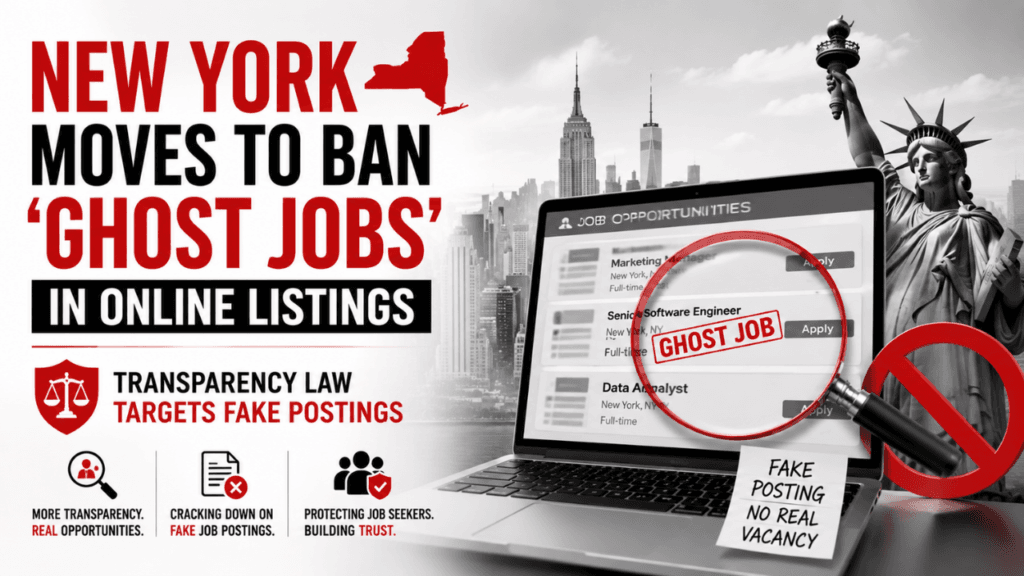
NEW YORK, June 26- Job seekers in New York may soon find greater clarity in online listings, as state lawmakers have passed a bill designed to curb the growing problem of “ghost jobs” — postings for roles that companies never intend to fill. The measure, Bill S8877, cleared both the State Senate and Assembly on April 28 and now awaits review by Governor Kathy Hochul. If signed into law, it would make New York one of the first states to directly regulate misleading job advertisements.
What Are ‘Ghost Jobs’?
Ghost jobs refer to listings that appear on company websites or job boards but do not correspond to actual openings. Employers sometimes post these ads to collect resumes for future use, gauge market interest, or maintain the appearance of growth. In other cases, outdated postings remain online long after a role has been filled. For job seekers, the result is wasted time, frustration, and diminished trust in the hiring process.
A recent analysis of 175,000 job listings found that about one in seven remained active for more than 30 days, even though most companies stop reviewing applications after that period. This disconnect has fueled calls for stronger regulation.
Key Provisions of Bill S8877
The New York legislation introduces several requirements aimed at ensuring transparency:
- Employer Scope: Applies to companies with 100 or more employees and to third‑party job sites.
- Disclosure Rules:
- If a company expects to fill a role within 90 days, the posting must clearly state the timeframe in bold, capital letters.
- If there is no current opening, the ad must say so and provide a rough estimate of when hiring might occur.
- If the listing is only for collecting resumes, that purpose must be disclosed upfront.
- Timely Removal: Employers must take down job ads within two weeks of hiring someone for the position, preventing outdated listings from misleading applicants.
Lawmakers argue that these measures will reduce confusion, save job seekers time, and hold employers accountable for the accuracy of their postings.
Why the Law Matters
For job seekers, ghost jobs represent more than an inconvenience. They can distort perceptions of the labor market, inflate expectations about available opportunities, and contribute to prolonged unemployment. Applicants often invest hours tailoring resumes and preparing cover letters, only to discover that the role was never real.
For employers, the practice can backfire. While collecting resumes may seem strategic, misleading postings erode trust and damage brand reputation. In an era where transparency is increasingly valued, companies risk alienating potential talent by appearing deceptive.
Broader Regulatory Context
New York’s bill builds on a growing trend of states regulating job advertisements. Colorado pioneered pay transparency rules in 2021, requiring salary ranges in postings. Since then, at least 11 states and Washington, D.C. have adopted similar measures. These laws aim to promote fairness, reduce wage gaps, and empower candidates with better information.
New York’s initiative shifts the focus from pay transparency to hiring transparency. By mandating disclosure of whether a job is real, when it might be filled, or whether resumes are being collected for future consideration, the state is tackling a different but equally pressing issue in the digital hiring ecosystem.
Other states are watching closely. New Jersey, California, Kentucky, and Pennsylvania reportedly have similar proposals under review. If New York’s law is enacted, it could set a precedent for nationwide reforms.
Industry Reactions
Employer groups and HR professionals are divided. Some argue that the law will impose additional compliance burdens, particularly on large companies that manage hundreds of postings across multiple platforms. Others welcome the clarity, noting that transparent practices can improve candidate experience and strengthen employer branding.
Recruitment experts suggest that companies may need to overhaul their posting strategies. Automated systems that recycle job ads or keep them live indefinitely will have to be reconfigured. HR teams will need to coordinate more closely with hiring managers to ensure postings reflect real, timely openings.
Job seekers, meanwhile, have expressed cautious optimism. Advocacy groups say the law could help restore confidence in online job boards, which have been criticized for hosting outdated or misleading ads. For candidates navigating a competitive market, knowing whether a role is genuinely open could make a significant difference.
Potential Challenges
Implementation will not be without hurdles. Monitoring compliance across thousands of employers and third‑party platforms will require robust enforcement mechanisms. Questions remain about how violations will be penalized and whether job boards will bear responsibility for policing listings.
There is also concern about unintended consequences. Some employers may reduce the number of postings altogether to avoid regulatory risk, potentially limiting visibility into future opportunities. Others may adopt vague language to skirt disclosure requirements, necessitating clear guidelines and oversight.
The Bigger Picture
At its core, New York’s bill reflects a broader shift toward accountability in digital labour markets. Just as pay transparency laws sought to level the playing field, hiring transparency laws aim to ensure that candidates are not misled about opportunities. Together, these measures signal a new era in employment regulation, one where information symmetry is prioritized.
For job seekers, the law could mean fewer wasted applications and more realistic expectations. For employers, it presents an opportunity to build trust and demonstrate commitment to ethical hiring practices. For policymakers, it represents a step toward modernizing labor regulations to match the realities of online recruitment.
Looking Ahead
If Governor Hochul signs the bill, New York will become a pioneer in tackling ghost jobs. The law would take effect in 2027, giving employers time to adjust systems and processes. HR departments will need to train staff, update software, and establish protocols for timely removal of postings.
The success of the law will depend on enforcement and employer buy‑in. If implemented effectively, it could reshape the online job market, making it more transparent and trustworthy. If poorly enforced, ghost jobs may persist, undermining the law’s intent.
Either way, New York’s move has already sparked national conversation. As other states consider similar measures, the debate over ghost jobs is likely to intensify. For millions of job seekers, the hope is simple: that the listings they see online truly represent opportunities worth pursuing. For further insights into the evolving workplace paradigm, visit

- Shilpa Kalathur on Plugging the ‘Leaky Pipeline’ via Flexible Tech Ecosystems - October 10, 2026
- Ashish Gupta on Employee Benefits : Are they Ready for the “Sandwich Generation”? - October 10, 2026
- Zypp Electric Expands Employee Ownership with ₹11 Crore ESOP Allocation - October 2, 2026








1 thought on “New York Moves to Ban ‘Ghost Jobs’ in Online Listings: Transparency Law Targets Fake Postings”