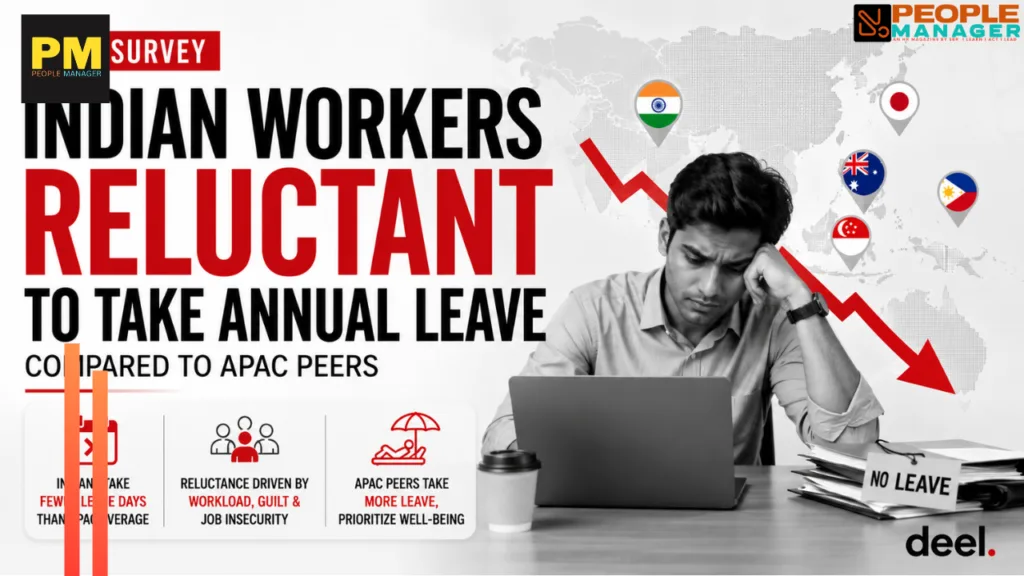
Indian Workers Reluctant to Take Annual Leave Compared to APAC Peers: Deel Survey
In 2025, the median leave taken by Indian workers was 12 days, a figure that lags behind regional peers. Only 17.2 percent of Indian employees used 100 percent of their leave entitlement, compared with 57.2 percent in Singapore, 53.3 percent in South Korea, 50.8 percent in Malaysia, 42.9 percent in Hong Kong, and 35.9 percent in Japan. Even when considering employees who used at least 80 percent of their entitlement, India ranked lowest at 29.9 percent, underscoring a culture of underutilization.
MUMBAI, India— Indian employees are taking fewer annual leaves than their peers across Asia-Pacific (APAC) markets, despite having relatively generous entitlements, according to a new survey by HR and payroll company Deel. The findings highlight a persistent gap between leave allocation and actual usage, raising questions about workplace culture, employee well-being, and organizational productivity.
The Survey Landscape
The report draws on inputs from over 4,500 full-time workers across APAC who are active on Deel’s platform in 2025. It provides a comparative snapshot of leave usage patterns across major economies including India, Singapore, South Korea, Malaysia, Hong Kong, and Japan. While the data confirms that Indian employees are entitled to competitive leave packages, it also reveals that they are far more conservative in exercising those rights.
In 2025, the median leave taken by Indian workers was 12 days, a figure that lags behind regional peers. Only 17.2 percent of Indian employees used 100 percent of their leave entitlement, compared with 57.2 percent in Singapore, 53.3 percent in South Korea, 50.8 percent in Malaysia, 42.9 percent in Hong Kong, and 35.9 percent in Japan. Even when considering employees who used at least 80 percent of their entitlement, India ranked lowest at 29.9 percent, underscoring a culture of underutilization.
Short Breaks Over Long Vacations
The survey also revealed a distinctive pattern in how Indian employees structure their time off. India recorded the highest share of short-duration leaves, with workers preferring to spread their entitlement across the year rather than taking extended vacations. Among multi-day vacation requests (defined as two days or longer), nearly 48.4 percent were exactly two-day breaks. This suggests that Indian employees are not avoiding leave altogether, but are cautious in how they deploy it.
“India’s leave data suggests employees are not stepping away from work less often, they are more selective about how they use time off,” explained Rakesh Gaur, Head of Sales for India at Deel. “That cautious approach may reflect workload pressures, cultural habits, or a tendency to save leave for important periods like festivals or family events. The bigger question for employers is whether underused leave reflects productivity, or signals burnout, pressure, and workplace cultures where employees don’t feel comfortable fully switching off.”
Cultural and Structural Influences
Several factors may explain India’s distinctive leave usage patterns:
- Workload Pressures: Many Indian employees operate in high-demand sectors such as IT services, manufacturing, and finance, where project timelines and client commitments often discourage extended absences.
- Cultural Norms: In India, leave is frequently reserved for family obligations, festivals, or emergencies rather than leisure travel. This cultural orientation toward “purpose-driven leave” reduces the likelihood of long vacations.
- Job Security Concerns: In competitive labor markets, employees may fear that taking extended leave could be perceived as a lack of commitment, potentially affecting career progression.
- Managerial Influence: Supervisors and organizational culture play a significant role. In workplaces where leaders rarely take long breaks themselves, employees may feel pressured to follow suit.
Flexible Policies Drive Higher Usage
Interestingly, the survey found that flexible leave policies were associated with higher time-off usage in India. Employees on flexible arrangements — where leave can be taken more freely without rigid approval structures — tended to use more of their entitlement compared to those bound by fixed policies. This suggests that policy design can influence behavior as much as workplace culture.
Organizations that encourage flexibility and normalize leave-taking may therefore see better outcomes in terms of employee well-being and retention. Conversely, rigid structures may inadvertently reinforce the tendency to underutilize leave.
Implications for Employers
The findings raise important questions for HR leaders and business executives:
- Employee Well-being: Underutilization of leave may contribute to stress, fatigue, and burnout. While short breaks provide temporary relief, they may not offer the restorative benefits of longer vacations.
- Productivity vs. Pressure: Employers must consider whether reduced leave usage genuinely reflects higher productivity, or whether it masks unhealthy workplace dynamics where employees feel unable to disconnect.
- Talent Attraction: In competitive markets, offering and encouraging the use of leave can be a differentiator. Companies that actively promote work-life balance may be better positioned to attract and retain talent.
- Policy Innovation: Flexible leave structures, wellness programs, and cultural interventions could help normalize leave usage and reduce stigma around taking time off.
Regional Comparisons
The contrast with other APAC markets is striking. In Singapore and South Korea, more than half of employees used their full entitlement, reflecting cultures where leave-taking is more normalized. Malaysia and Hong Kong also showed stronger usage rates, while Japan — often associated with overwork — still outperformed India in terms of employees using at least 80 percent of their leave.
This comparative lens suggests that India’s cautious approach is not simply a regional norm but a distinctive national pattern. It highlights the need for Indian employers to rethink how leave policies are communicated, managed, and culturally embedded.
The Outlook
As India continues to position itself as a global economic powerhouse, workplace culture will play a critical role in sustaining growth. Encouraging employees to take full advantage of their entitlements is not merely a matter of compliance but of strategic importance. Rested employees are more creative, resilient, and productive — qualities essential for innovation-driven growth.
The Deel survey underscores that while India offers generous leave packages, the challenge lies in bridging the gap between allocation and usage. Employers who address this gap proactively may not only improve employee well-being but also strengthen organizational performance in the long run. For further insights into the evolving workplace paradigm, visit

- Raghu Vamsi Group appoints Dr. S K Jha as CEO of the Advanced Materials Division - October 13, 2026
- TCS Withholds Quarterly Variable Pay for Senior Employees, Awards Full Allowance to Junior Staff - October 12, 2026
- CDK Global Names Sudhakar Ramakrishna President And CEO - October 6, 2026