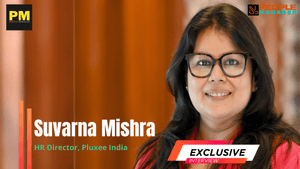

Suvarna Mishra on Redefining the Employee Value Proposition: Making Benefits Truly Reflect How People Live and Work
If wellbeing matters to you, employees should see that in the support available when they need it. If inclusion matters, benefits should recognise different family structures and circumstances. If flexibility matters, the benefits proposition shouldn’t assume everyone works from the same place every day – Employee Value Proposition.
As organizations navigate changing employee expectations, evolving workforce demographics, and new ways of working, the traditional approach to employee benefits is undergoing a fundamental transformation. The focus is shifting from offering standardized benefit packages to creating a more meaningful and personalized Employee Value Proposition (EVP) one that genuinely reflects how people live, work, and experience different stages of their lives.
At the heart of this transformation is the recognition that employees are not a homogeneous workforce. Their needs vary based on life stage, family responsibilities, financial circumstances, career aspirations, and personal well-being. Organizations are therefore moving beyond the traditional one-size-fits-all benefits model toward more flexible, inclusive, and employee-centric programs that provide greater relevance and choice.
This requires HR leaders to take a deeper, data-led approach to understanding what employees genuinely value. Rather than relying solely on legacy benefit structures, organizations must use employee listening, workforce analytics, demographic insights, and feedback mechanisms to identify gaps between what companies offer and what employees actually need. The objective is to design benefits that create real value not simply benefits that look attractive on paper.
Equally important is the growing emphasis on personalization and flexibility. Employees increasingly expect organizations to recognize their individual circumstances, whether related to health and well-being, financial security, caregiving responsibilities, learning, flexibility, or work-life integration. A modern EVP must therefore provide employees with meaningful choices while maintaining fairness, consistency, and organizational sustainability.
As work itself continues to evolve, benefits are also becoming an important component of employee experience. Hybrid work, changing family structures, multigenerational workforces, and increasing concerns around mental and financial well-being are reshaping expectations. Organizations that continuously adapt their EVP to these realities are better positioned to strengthen engagement, trust, belonging, and long-term retention.
However, redefining the EVP also presents significant challenges. HR leaders must balance personalization with equity, employee expectations with financial sustainability, and flexibility with governance. Communication is equally critical because even the most valuable benefits can fail to create impact if employees do not understand, access, or appreciate them.
The future of employee benefits therefore lies not simply in offering more, but in offering what is more relevant. Success will increasingly depend on how effectively organizations connect their benefits strategy with the real lives of their employees and create experiences that support them both inside and outside the workplace.
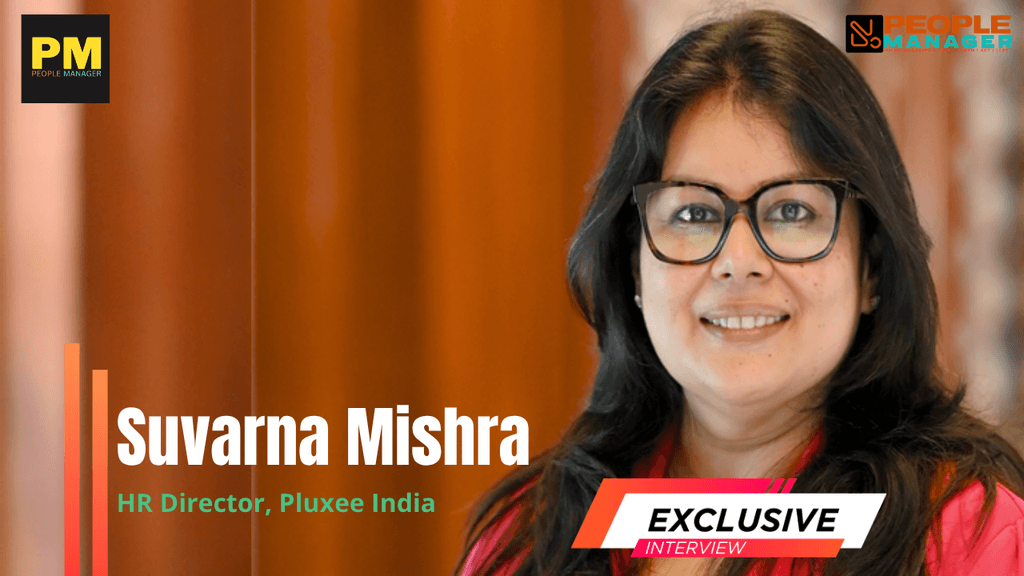
In this conversation with People Manager, Suvarna Mishra emphasis how organizations can redefine the Employee Value Proposition by moving beyond conventional benefits and building people-centric offerings that genuinely reflect the realities of modern work and life. The conversation highlights a critical shift in HR strategy—where benefits are no longer viewed merely as a compensation component, but as a powerful mechanism for strengthening employee trust, experience, inclusion, and the overall employment relationship.
Ultimately, the organizations that will stand out will be those that listen closely to their people and design an EVP that is not just competitive in the market—but genuinely meaningful in the lives of employees.
Q.: How do you see the employee value proposition evolving globally, especially as organisations move beyond compensation and traditional benefits?
Ans.: I think the employee value proposition is changing quite fundamentally. Compensation will always remain important, but employees are increasingly looking at the overall experience of working with an organisation. They are thinking about whether they have flexibility, how their wellbeing is supported, whether they have opportunities to learn and grow, and whether the benefits available to them fit their circumstances and stage of life.
What I find particularly interesting is the shift from asking, “How many benefits can we offer?” to “Are we offering the right benefits for our people?” Employees have different priorities depending on where they are in their careers and lives, so a one-size-fits-all benefits package is becoming less relevant.
We see some of this shift reflected in our India findings as well. In Pluxee India’s Employee Benefits Study, which looked at how organisations across India are designing and managing employee benefits, we found that while meal and LTA continue to be among the most commonly offered benefits, organisations are also looking at areas such as health and wellbeing, hybrid working, connectivity and travel as employee needs evolve.
For me, that is really the evolution of EVP — it is becoming less about having an extensive list of benefits and more about making sure what you offer is relevant, accessible and meaningful to the people you employ.
I also think this puts more responsibility on organisations to continuously reassess their benefits proposition. Employees’ needs don’t remain static, so the EVP cannot be treated as something that is designed once and then left unchanged.
Q.: In your view, why has workplace flexibility become one of the most critical elements of the modern EVP?
Ans.: I’d put it down to how much the workforce itself has changed. Employees are juggling parenting, caregiving, commuting and personal commitments, often simultaneously. The old assumption that everyone can build their life around fixed hours and a fixed location doesn’t hold anymore.
What’s interesting is that this isn’t limited to a particular industry or market anymore. As ways of working have evolved, employees are increasingly looking for more autonomy in how they manage their work and their lives around it.
Flexibility isn’t only about working from home, though. The real question is whether employees have reasonable autonomy in how they deliver outcomes, while managers stay clear on accountability. You can see this shift in the benefits employees are looking for as well. Our Pluxee India Employee Benefits Study reflects how changing work patters are influencing benefit priorities, including greater emphasis on fuel and communication benefits.
There’s a management lesson in this too. A flexible policy doesn’t automatically create a flexible culture. If managers still equate being physically present with being committed, the policy won’t do much.
I believe the organisations that get flexibility right tend to be just as disciplined about outcomes as they are generous with autonomy. Employees need both: the freedom to work how it suits them, and clarity on what’s expected. That balance is what makes flexibility durable.
Q.: How can HR leaders embed wellbeing—mental, physical, and financial into benefits programs in a way that resonates with diverse workforce needs?
Ans.: I think the starting point is to stop looking at wellbeing as a standalone HR programme. Employees don’t experience their mental, physical and financial wellbeing separately, so the support organisations provide shouldn’t be designed in silos either. Financial pressure can affect mental wellbeing, caregiving can create physical and emotional strain, and work pressures can compound both.
The other important consideration is that well-being means different things to different employees. What an employee needs can change significantly depending on their career stage, family responsibilities and personal circumstances. Someone early in their career may value financial planning and learning support, while a parent may place greater importance on healthcare, flexibility or childcare. Someone supporting ageing parents may have an entirely different set of priorities.
That is why I don’t think the answer is to keep adding more wellness initiatives. HR leaders need to start by listening to what their employees are actually dealing with and then create enough choice and flexibility for people to access the support that is relevant to them.
I also think there is a tendency to focus on the breadth of a well-being program without paying enough attention to whether employees can actually use it. And just as importantly, the benefit has to be easy to understand and access. Offering the right support doesn’t create much value if employees don’t know it exists or find the process difficult to navigate.
For me, good well-being design is ultimately about being relevant to different needs and being there when those needs arise, rather than expecting one programme to work for everyone.
Q.: Practical Benefits in Daily Life: What role do everyday benefits such as meals, connectivity, and gifting play in shaping employee experience compared to conventional perks?
Ans.: I think everyday benefits have an important role to play because they are experienced much more frequently than many conventional perks. An annual event or a one-time perk can create a memorable moment, but a benefit that makes someone’s day a little easier can create value repeatedly.
Meals, for example, address something employees need as part of their everyday routine. Connectivity becomes increasingly relevant when work and life are less tied to a single location, while gifting can create a sense of recognition and give employees the freedom to choose something that is meaningful to them.
What connects all three is that they are tangible and relevant to how people actually live and work. They address practical needs while, in the case of recognition, also creating an emotional connection.
I also think this is where the definition of a good benefit is changing. Employees don’t necessarily need benefits to be extravagant; they need them to be useful. The practical question for HR is quite simple: does this solve a real problem, create convenience or make the employee feel recognised? If it does, employees are likely to notice and value it.
We often think of employee experience in terms of big moments, but I believe the smaller, recurring interactions can be just as important. Removing a small friction from someone’s day may not seem significant in isolation, but repeated over weeks and months, it can have meaningful impact on how employees experience their organisation.
The shift, ultimately, is towards benefits that fit into employees’ lives rather than asking employees to adapt to the benefit.
Q.: Cultural & Regional Adaptation: How should multinational organisations adapt their benefits strategy to reflect cultural and regional differences in how employees live and work?
Ans.: I think the right approach for multinational organisations is to be consistent in intent, but not identical in execution.
What counts as a “good benefit” can shift quite a bit depending on family structures, local regulations, healthcare systems, commuting patterns and where employees are in their lives. There really isn’t a universal template.
In my view, the important thing is to have a common philosophy around areas such as well-being, financial security, flexibility and inclusion, while giving local teams enough room to interpret that based on what employees in their market actually need. A benefit that works well in one country may not have the same relevance somewhere else.
And this is where local listening becomes important. Employee feedback, conversations with managers and even how people use the benefits already available can tell you a lot about what is genuinely valuable in that market.
I have always felt that a global benefits framework should provide consistency without being restrictive. You can have a very well-designed global philosophy, but if it doesn’t reflect how people live and work locally, it won’t have the same impact.
The goal is not to have different philosophies for different markets. It’s one clear intent, executed in ways that make sense on the ground.
Q.: Digital Transformation of Benefits: With digital platforms simplifying access to benefits, how do you see technology redefining employee engagement with these offerings?
Ans.: Technology has reset what convenience means. In India particularly, employees measure “instant” against how quickly money moves through their everyday banking and consumer apps, so a benefits claim that takes days to process can feel like a step backwards.
The gap is still quite significant. Our Employee Benefits Study found that 43% of organisations relied on paper-based processes to manage employee benefits and reimbursements. While 57% were managing benefits digitally, only 30% of those organisations are using a mobile app.
For me, that gap matters beyond convenience. When employees find benefits difficult or time-consuming to access, they may simply stop using them. What then appears to be low utilisation may actually be a problem of friction rather than a lack of need.
I don’t think digital should simply mean moving a complicated process behind a login screen. Technology should make benefits easier to discover, understand, access and track. It should remove friction rather than simply digitise it.
Employees are already used to simple, intuitive experiences in their everyday lives, and they increasingly expect the same level of ease at work.
So, in my view, digital transformation is not complete when benefits become paperless. It is complete when they become intuitive. That is when technology can genuinely change how employees engage with benefits available to them.
Q.: Personalisation & Choice: Employees increasingly expect personalised benefits. What strategies can HR leaders adopt to balance personalisation with scalability?
Ans.: Personalisation doesn’t mean building a completely different benefits structure for every employee, which would obviously be difficult to manage at scale. The better approach is to build a common foundation and then give employees meaningful choice within it.
The key is to understand where that choice actually matters. An early-career employee might prioritise learning or mobility, while a parent may value healthcare or flexibility. Someone supporting elderly parents may have a very different set of priorities. The designation may be the same, but the circumstances are not.
This is why I think personalisation is less about offering unlimited options and more about offering relevant options. Giving employees multiple choices is not necessarily personalisation if none of those choices addresses what they need.
HR needs to first understand whether employees know what is already available and whether those options are relevant to them. Employee feedback can then help identify where more choice is needed.
Technology can then make that choice easier to manage at scale, without creating unnecessary administrative complexity for HR.
The principle, for me, is simple: standardise the system, not the experience.
Q.: Measuring Impact beyond Uptake: what metrics should organisations track to evaluate whether benefits are truly enhancing employee satisfaction and productivity, rather than just being offered?
Ans.: Utilisation alone can be misleading. If a benefit has low uptake, it could mean employees don’t need it, don’t know it exists, or find it too difficult to access. Equally, high uptake doesn’t necessarily mean that employees had a positive experience.
So, I would look at the experience around the benefit, not just the number of people using it.
I would start with awareness. Do employees understand what is available to them and why it is relevant? Then look at utilisation, but alongside measures of ease and experience. How many steps does it take to access a benefit? How long does a claim take? How often do employees need to follow up? These details can tell you whether a benefit is genuinely accessible or simply available on paper.
The next step is to look at how employees feel about the benefits they receive. Are they satisfied with the support available to them? Do they feel the benefits are relevant to their needs?
Over time, HR can then look at broader indicators such as engagement, retention, absenteeism and productivity to understand whether the benefits are contributing to the employee experience.
Q.: Future of EVP in Hybrid Work: How does the rise of hybrid and remote work models influence the design of benefits that reflect employees’ real lifestyles?
Ans.: Hybrid work challenges a basic assumption that the workplace is a fixed location. For a lot of employees, it isn’t anymore.
Many traditional benefits were designed around an office-centric world: meals tied to office presence, connectivity treated as a personal cost and commute benefits built around one predictable route. Hybrid work has made some of those assumptions less relevant. As employees move between home, office and other locations, the benefits they need can change too.
The opportunity for HR is to design benefits that follow the employee. That could mean access to meals regardless of location, mobile expenses and home WiFi support, recognition that reflects different commute patterns and digital access that doesn’t depend on being in the office.
I also think this is part of a broader shift in EVP. If we say that employee experience matters, then the experience shouldn’t disappear when someone leaves the office.
The more useful question isn’t “what does an employee get when they come to the office?” It’s “what does an employee need to do good work and live well, wherever that happens?”
That is the question I believe HR leaders will increasingly need to ask as work becomes more distributed.
Q.: Strategic Role of HR Leaders: Finally, what advice would you give HR leaders globally on positioning benefits as a strategic lever for talent attraction, retention, and engagement?
Ans.: My advice would be to stop treating benefits as a list you update once a year. Benefits can easily become something that is reviewed at renewal time and then left alone, when in reality they are one of the clearest ways an organisation shows what it actually believes about its people.
If wellbeing matters to you, employees should see that in the support available when they need it. If inclusion matters, benefits should recognise different family structures and circumstances. If flexibility matters, the benefits proposition shouldn’t assume everyone works from the same place every day.
These choices send a message about who the organisation is designing its employee experience for.
I’d also encourage HR leaders to keep asking whether processes and benefits that were designed years ago still make sense for today’s workforce. What matters to a new hire may be very different from what matters to someone who has been with the organisation for ten years. Career stage, lifestyle and personal circumstances change, and the benefits proposition needs to be able to change with them.
When benefits are relevant, accessible and genuinely useful, they become more than an HR offering. They can influence why someone chooses an organisation, why they stay and how supported and engaged they feel while they are there.
At the end of the day, people don’t experience an organisation through its HR strategy document. They experience it through everyday interactions, how easy something is to access, whether their circumstances are recognised and whether the support actually helps when it’s needed, not just when it’s offered.
That’s where benefits earn their place in the EVP. For further insights into the evolving workplace paradigm, visit

- Suvarna Mishra on Redefining the Employee Value Proposition: Making Benefits Truly Reflect How People Live and Work - September 1, 2026
- Three Fourth Solutions Onboards Ishita Shah as Vice President, Global Expansion to Drive International Growth - August 26, 2026
- India’s Fraud Landscape Evolves as Organised Networks Grow More Sophisticated: Experian Report - August 25, 2026